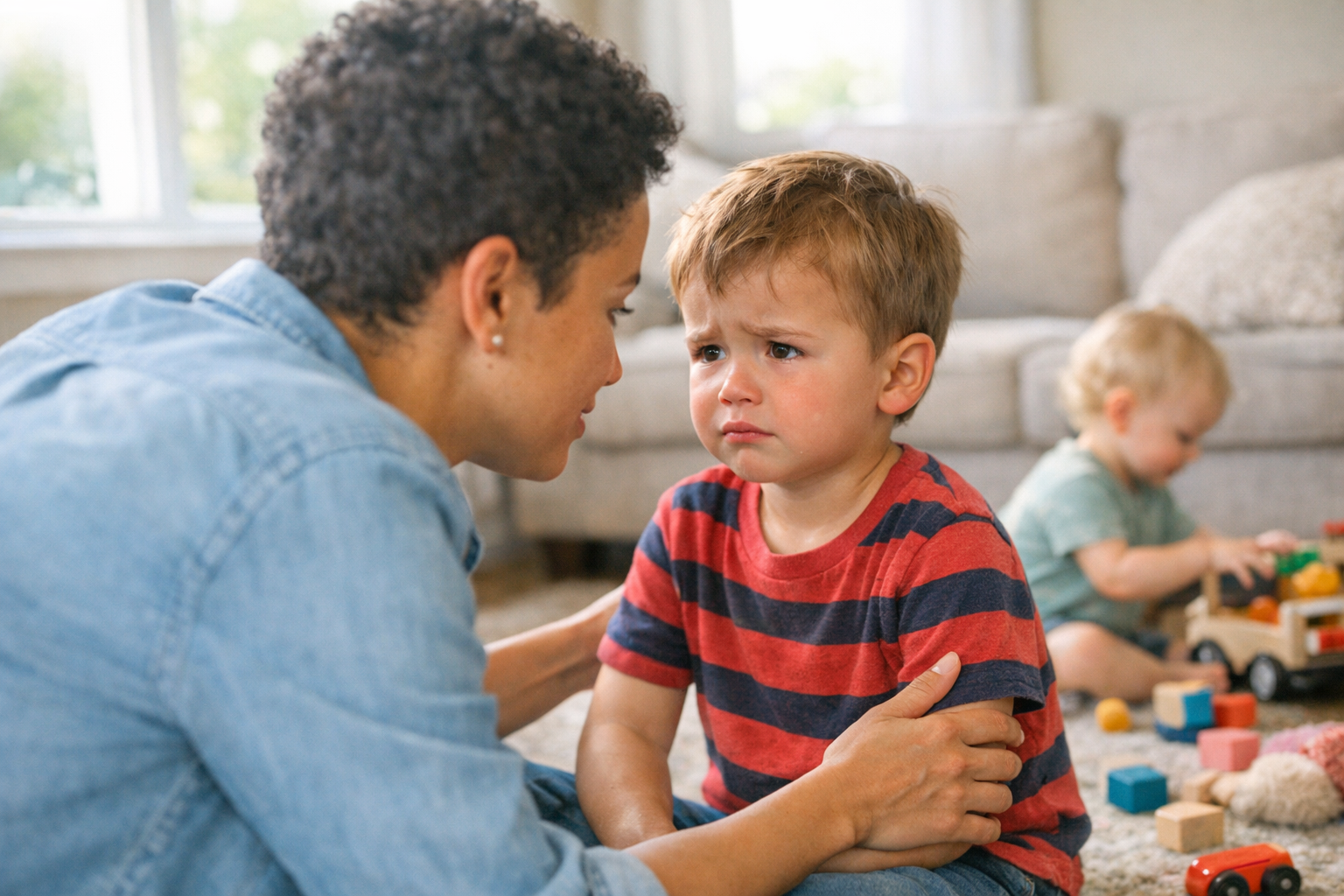
Aggression in preschoolers (about ages 3–5) can show up as hitting, grabbing, yelling, threatening, or trying to control play. Sometimes it happens during high-stress moments like transitions, sharing, being told “no,” or feeling left out.
This guide focuses on what you can do in the moment: quick steps, simple scripts, predictable routines, and the most common triggers. If you’re also trying to understand the emotional “why” behind big reactions, you may find this guide helpful: Emotional signs of anger in a 2 year old. Baby anger problems and management.
Advice:
If aggressive moments keep repeating, it helps to step back and notice patterns: what happens right before the behavior, which situations are hardest, and what your child is trying to get (space, control, attention, help). The Parenting Test can help you organize what you’re seeing and choose one practical focus for the next two weeks. It’s not about blame—it’s about getting clearer so you can respond consistently.
Before the list: a quick “in-the-moment” plan that works for many preschoolers
When a child is aggressive, long lectures rarely help in the moment. Try this short sequence instead:
- Stop the action (calm body, clear voice). “I won’t let you hit.”
- Block and create space. Move closer, gently hold hands at your child’s sides if needed, or step between kids.
- Name the limit and the goal. “People are not for hurting. We use gentle hands.”
- Offer one acceptable alternative. “You can stomp, squeeze a pillow, or say ‘Move please.’”
- Repair when calm. “Let’s check on your friend. What can you do to help?”
If your child’s aggression feels sudden or “out of nowhere,” you may also want to read How to handle unprovoked aggression in toddlers (many strategies carry over to preschool ages).
10 early signs of aggressive behavior in preschool children
Many preschoolers have occasional rough moments. These signs are more concerning when they’re frequent, intense, or happening across settings (home, school, playdates) and not improving with consistent support.
- They frequently get into conflicts and seem “stuck” in a negative role.
A child may start expecting rejection (“Nobody likes me”) and then act out to get noticed. In the moment script: “You want to play too. Say, ‘Can I have a turn when you’re done?’ I’ll help.” - They use direct aggression with peers (hitting, pushing, grabbing, threatening).
This often spikes during sharing, waiting, crowded spaces, or exciting games. In the moment script: “Stop. Hands down. Tell me: ‘I want that toy.’ Then we’ll ask or set a timer.” - They bite, spit, pinch, or kick when frustrated.
These behaviors can be a sign your child is overwhelmed and doesn’t yet have enough self-control or words. Quick routine: practice a daily “mad plan” (stomp 5 times, breathe with you, squeeze a ball) when calm, so it’s available when upset. - They retaliate or “get even” after a small problem.
A minor bump or “no” becomes payback. In the moment script: “You’re mad. I won’t let you hurt. You can say, ‘I’m mad—back up.’” - They assume bad intentions and blame others.
Some kids are on high alert and interpret accidents as mean. In the moment script: “Let’s check: was it an accident or on purpose? We use words first.” - They melt down fast from irritation (low frustration tolerance).
Watch for patterns: hunger, tiredness, overstimulation, screen transitions, or too many directions at once. Prevention routine: snack + water, warning before transitions, and one-step directions. - They argue constantly, resist, and escalate when corrected.
This can be a power-and-control moment, not “bad character.” In the moment script: “You don’t have to like it. The rule is _____. You can choose A or B.” - They target younger/weaker kids or dominate play.
Sometimes this happens because your child doesn’t know how to enter play kindly, share control, or handle losing. Coaching script: “Ask: ‘Can I play?’ Then: ‘Do you want to be the driver or the builder?’” - They become furious about embarrassment (thinking others are laughing at them).
Big reactions to teasing, mistakes, or losing can signal sensitivity. In the moment script: “That felt embarrassing. It’s okay to feel mad. It’s not okay to hurt. Let’s take a break together.” - They show indirect or passive aggression (refusing, sabotaging, shutting down).
Some kids hide anger and express it through stubbornness, “forgetting,” or refusing to cooperate. Supportive approach: give words for the feeling (“You’re mad about leaving”) and a small choice, then follow through calmly.
Common triggers (and quick fixes you can try this week)
- Transitions: use a 5-minute warning, then a clear “first/then.” “First shoes, then outside.”
- Sharing and turn-taking: use a timer and narrate. “When the timer beeps, it’s Mia’s turn.”
- Overstimulation: reduce background noise, offer a quiet corner, and keep playdates short.
- Skill gaps: practice “entry lines” daily: “Can I play?” “I’m using this.” “Stop.” “Help, please.”
- Attention needs: schedule 10 minutes of daily child-led play (no teaching, no correcting) to fill the connection tank.
What to do after an aggressive moment (repair without shame)
Once your child is calm, keep it simple and consistent:
- Brief recap: “You were mad when the block tower fell.”
- State the limit: “People are not for hurting.”
- Practice the replacement: “Show me ‘stop’ hands. Now say, ‘Help, please.’”
- Repair: help your child check on the other child, offer an ice pack, or help rebuild what was knocked down.
If the aggression is frequent at ages 3–5, you may also find targeted ideas here: How to tackle aggressive 3, 4, 5-year-old boy and girl. For safer ways to channel big energy at home, see Recommended toys for violent and aggressive toddlers (many suggestions work well for preschoolers, too).
When to seek professional help
Consider talking with your child’s pediatrician or a licensed child psychologist/therapist if you notice any of the following:
- Aggression is frequent and intense, or it’s getting worse over time.
- Your child is regularly injuring others, hurting animals, or destroying property.
- Behavior is causing serious problems at preschool/daycare or leading to repeated suspensions.
- Your child seems persistently anxious, withdrawn, or overwhelmed, or you suspect trauma or developmental concerns.
- You’re seeing concerning safety behaviors (running off into danger, using objects as weapons), or you don’t feel you can keep others safe.
For general developmental and behavioral guidance, families can review resources from the American Academy of Pediatrics and the CDC on young children’s social-emotional development and behavior concerns.
Tip:
If you’re unsure what to work on first, pick one repeated trigger (like transitions or sharing) and practice one short script every day for a week—consistency matters more than intensity. The Parenting Test can help you identify which situations are most linked to your child’s aggression and choose a realistic routine change that fits your family. Bring your results to a pediatrician or childcare conference if you want extra support.
With calm limits, practice when your child is regulated, and a predictable plan you repeat every time, many preschoolers learn safer ways to handle frustration, disappointment, and conflict.