Best Pets for Kids Ages 4–7: What to Choose (and What to Avoid)
If your 4–7-year-old is begging for a pet, you’re not alone. This age is prime time for curiosity, big feelings, and a strong desire to “take care of something.”
The catch: kids in this range can help, but they can’t reliably manage daily pet care without an adult leading the plan. This guide focuses on one practical scenario—choosing a first pet for a child ages 4–7—plus scripts and checklists you can use at home.
For a broader look at how animals can shape kids’ empathy, routines, and responsibility over time, see this guide: Effect of pets on child development: value, importance and benefits.
Advice:
Before you compare animals, do a 5-minute “family readiness” check together: time, budget, and who will do the not-fun tasks (cleaning, vet visits, weekend care). If you want help sorting what your child is really asking for—companionship, responsibility, comfort, or fun—take the Parenting Test. It can guide a calmer family conversation and help you pick a realistic next step.
The 60-Second Family Readiness Checklist
Use this quick list before you fall in love with a specific pet.
Daily time (be honest)
- 5–10 minutes/day: many fish setups (after initial setup is correct), some low-contact pets
- 15–30 minutes/day: small mammals (feeding, spot cleaning, gentle interaction)
- 60+ minutes/day: dogs (exercise, training, enrichment) and some highly social pets
Noise, mess, and smell tolerance
- Birds can be noisy and messy around the cage area.
- Small mammals need frequent cage maintenance to keep odors down.
- Dogs and cats bring fur, tracking, and occasional accidents—especially early on.
Allergies and asthma considerations
If your child has allergies or asthma, talk with your child’s clinician before adopting. Pet dander, saliva, hay/grass (common for rabbits and guinea pigs), and bedding can be triggers.
Safety basics you’ll supervise
- Handwashing: after handling animals, cages, food, or litter
- “No kisses” rule: kids shouldn’t kiss pets or put fingers in their mouths after touching animals
- Gentle handling: no squeezing, chasing, tail-pulling, or waking a sleeping pet
Best Pets by Age (4 to 7) With What Kids Can Actually Do
Below is an age-by-age match that keeps expectations realistic. A helpful rule: if your child can’t reliably do the daily task without reminders, it’s still an adult job.
Age 4: Mostly adult care, kid “helper” tasks
At 4, choose pets that are safe to observe and don’t require complex handling. The goal is practice with gentle behavior and simple routines.
Good matches
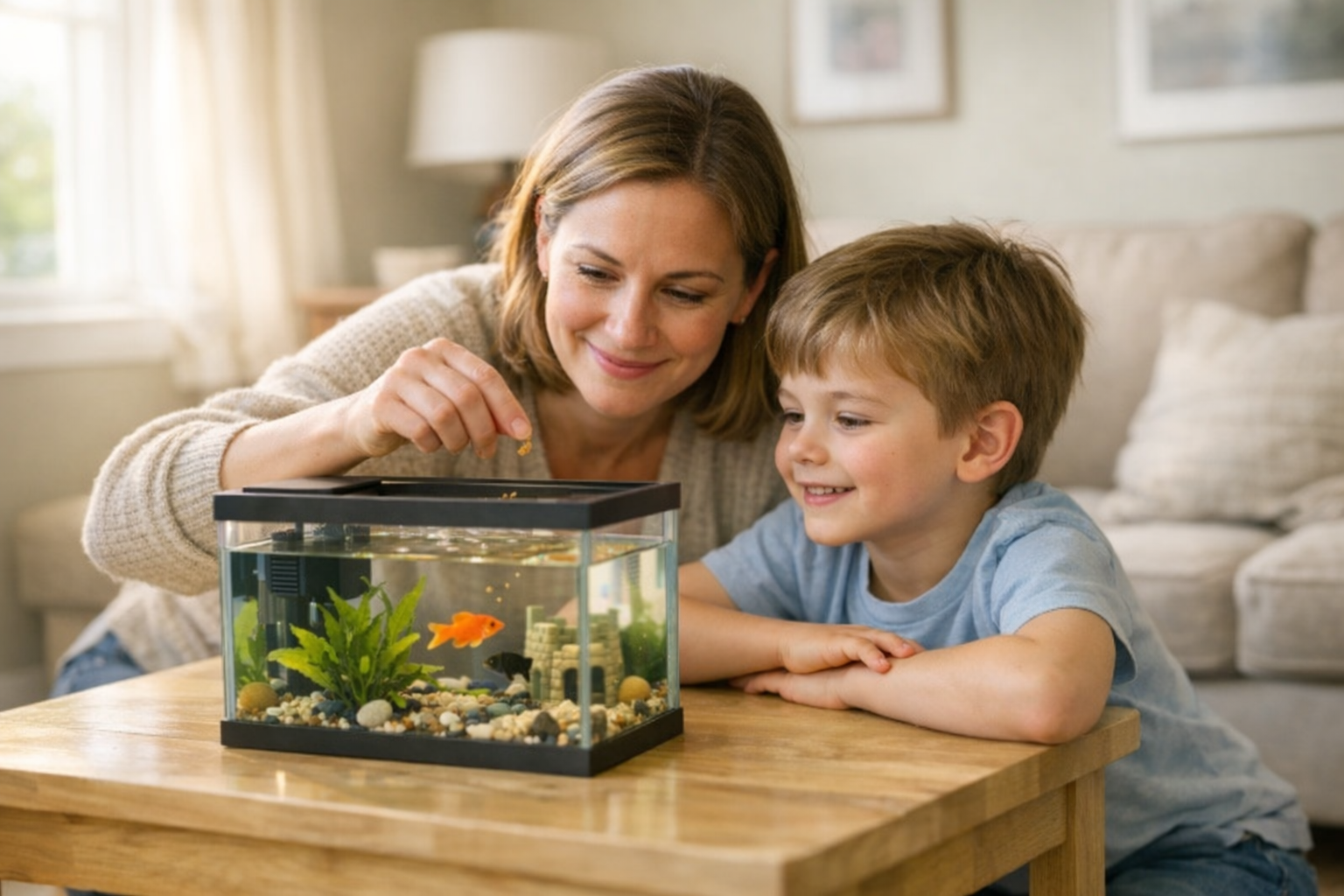
- Fish (with an adult-managed tank): great for observing and building routine; kids can help with pre-portioned feeding
- Small birds (budgies/canaries): fun to watch and listen to; adults handle cleaning and safe interaction
- Land turtles (low-contact pet): calm and quiet, best for families who enjoy observing more than cuddling
Parent script for age 4
Try: “Your job is to be the gentle helper. My job is to keep our pet healthy. We’ll do it together.”
Age 5: Supervised kid tasks can expand
Many 5-year-olds can follow short steps with coaching. Choose pets that tolerate gentle interaction and have clear, repeatable care routines.
Good matches
- Guinea pig: often a solid first small mammal; social, sturdy enough for supervised lap time
- Rabbit: can be affectionate, but needs careful handling, space, and consistent cleaning
- Hamster: common starter pet, but can be squirmy and may bite if startled (adult sets rules for handling)
- Rat (same-sex pair is often best): smart and social; needs frequent interaction and a clean habitat
- Chinchilla: more “look and gently interact” than “hold all the time”; needs specific care routines
A simple “kid job” list for age 5
- Refill water with an adult watching
- Pour pre-measured food
- Help spot-clean (adult does full cage cleaning)
- Practice gentle petting with “two-finger touch” (light touch, short time)
Age 6: Cats may become a realistic option
By 6, some kids can remember routines with reminders and can learn respectful boundaries—key for living with a cat.
Why cats can work well at this age
- They don’t need walks and can do well in smaller spaces.
- Litter routines can be adult-led with kid help (scooping with supervision).
- Cats often enjoy nearby companionship even when they don’t want constant handling.
Cat-boundaries script for kids
Try: “If the cat walks away, we let them. We pet with an open hand, and we never pick up the cat without a grown-up.”
Age 7: Dogs can be possible—with adult leadership
At 7, kids can participate more meaningfully, but an adult still must manage training, exercise, and safety. Dogs are a bigger lifestyle choice than most families expect.
When a dog is more likely to work
- Your household can commit to daily exercise and training.
- An adult can do walks (or closely supervise) until the child is truly able to control the leash.
- You’re choosing for temperament, not looks—calm, steady, kid-tolerant dogs are safest.
Common Pitfalls (and Better Alternatives)
“My child wants a cuddly pet”
Many animals don’t enjoy being held, especially when kids move quickly. If your child craves closeness, consider a calm adult cat, a well-matched dog, or a guinea pig with structured, supervised lap time.
“We want something low-maintenance”
No pet is truly zero-maintenance. If you need the lowest day-to-day demands, fish can fit—but only if an adult commits to proper tank setup and ongoing maintenance.
“We’ll see if it works out”
Rehoming is hard on kids and animals. Instead, do a trial routine for two weeks: set a daily alarm for the care tasks you expect to do, and see if your family can follow through.
When to Seek Professional Help
Consider talking with a pediatrician or allergy/asthma clinician before adopting if your child has significant asthma or allergies. Seek advice promptly if your child develops persistent wheezing, breathing trouble, or severe allergy symptoms after pet exposure. For safety and hygiene guidance around children and animals (including handwashing and bite prevention), you can also review CDC recommendations.
Related Guides for Choosing the Right Pet
- Top 10 good pets for kids under 5
- Most friendly and good pets with low maintenance for small children
- Cool pets for kids and teens that are easy to take care of
Tip:
If your child is set on one animal, ask them to “teach you” the care plan: where it sleeps, what it eats, and how to touch it safely. Then take the Parenting Test to reflect on your family’s routines and your child’s temperament, so your decision matches real life—not just the wish list. A thoughtful match now can prevent stress for everyone later.
With ages 4–7, the best first pet is usually the one that fits your household rhythms and gives your child a safe way to practice consistency and kindness. Start with your readiness checklist, choose for temperament and care level, and set clear “grown-up jobs” from day one.