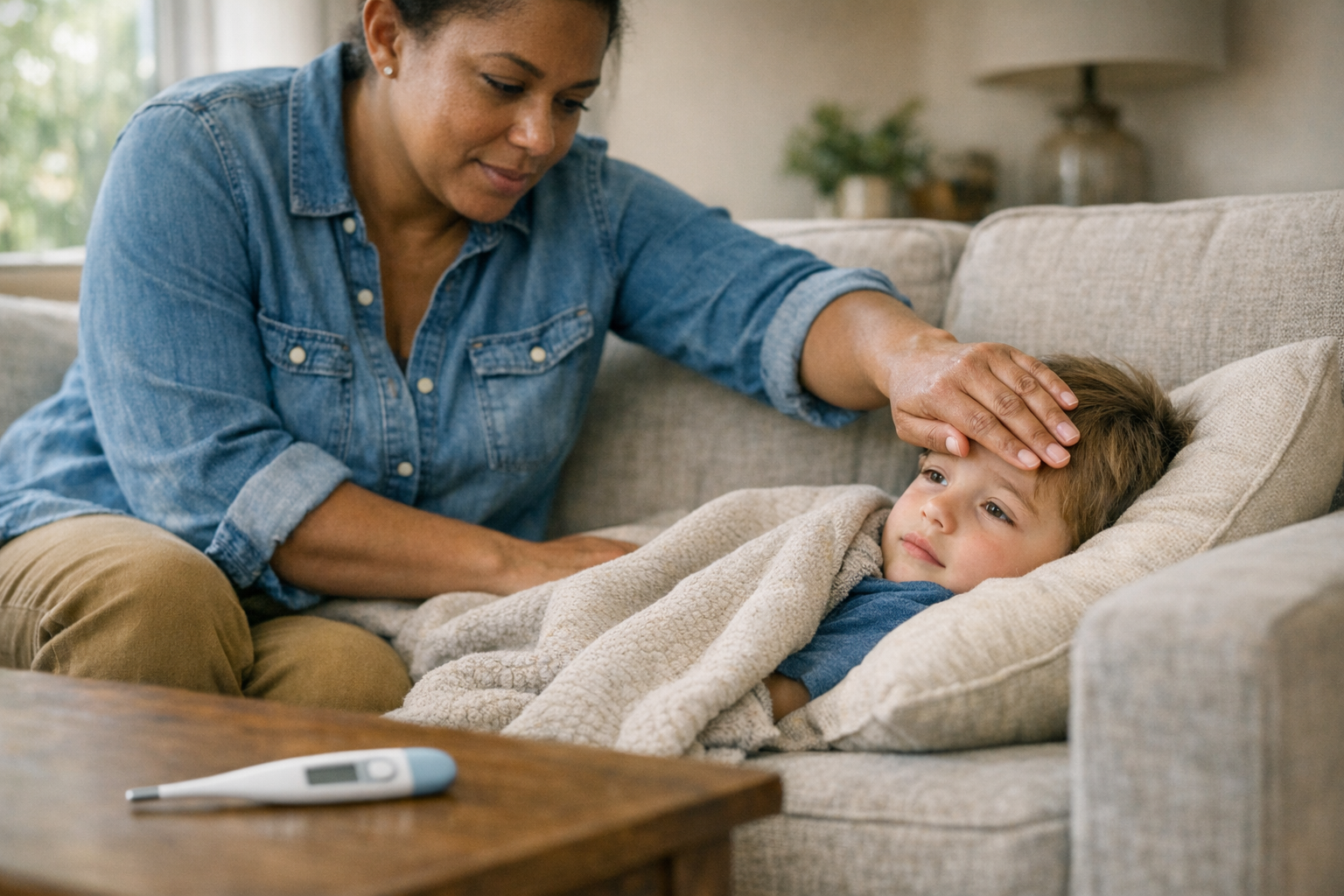
Fever With No Other Symptoms: What to Do in the Next 24–48 Hours
A fever can feel extra scary when there’s no cough, no runny nose, and no clear reason. Many kids develop other symptoms later (or never do), but in the moment, parents are left wondering whether to wait, treat, or call.
This guide focuses on one specific scenario: your child has a fever and otherwise seems mostly okay. You’ll get a simple timeline, a tracking checklist, and ready-to-use scripts for calling the pediatrician.
Advice:
If you’re unsure whether you’re seeing a “watch and wait” fever or an “I should call” fever, it helps to step through a quick self-check. The Parenting Test can help you sort what you’re noticing (temperature, behavior, hydration, and risk factors) so you can choose a calm next step. It’s not a diagnosis, but it can help you organize your thinking before you call or monitor.
If your child has multiple symptoms (cough, vomiting, severe sore throat, rash, ear pain) or you want broader sick-day basics, see this guide: Caring for a Sick Child at Home: Rest, Fluids, Food, and Meds.
Step 1: Make Sure It’s Really a Fever
A fever is generally 100.4°F (38°C) or higher. Before you assume the worst, take a careful temperature and double-check common “false alarms,” especially if your child was just running around or bundled up.
Quick temperature check (2 minutes)
- Pause overheating: Remove extra layers, move to a cooler room, offer water, and wait 20–30 minutes.
- Use the right method: Follow the thermometer’s instructions. Rectal temperatures are typically most accurate for infants.
- Repeat if needed: If the reading doesn’t match how your child looks and acts, recheck once.
Note: Teething and mild warmness can happen, but teething alone usually doesn’t cause a true fever (100.4°F/38°C or higher). If you’re getting a true fever, keep looking for infection or another cause.
Step 2: Do a “How Sick Does My Child Look?” Scan
Many clinicians focus less on the number and more on the child’s overall appearance and hydration. Ask:
- Are they responsive and making eye contact?
- Are they breathing comfortably?
- Are they drinking at least some fluids?
- Are they urinating regularly?
- Do they perk up at times, even if they’re tired?
If your child seems significantly “off,” hard to wake, very irritable and inconsolable, or weak and floppy, treat that as urgent, even if there are no other symptoms.
Step 3: Follow This 24–48 Hour Plan (With a Simple Tracking Log)
When there are no other symptoms, your job is mostly to support comfort and watch for changes. This short log helps you see patterns and gives your child’s clinician useful information.
What to track (write it down)
- Time + temperature and how it was taken (forehead, ear, oral, rectal).
- Meds given (name, dose, time) and whether it helped.
- Fluids (what and how much) and urine (how often).
- Energy/behavior (playing a little vs. listless, easily comforted vs. inconsolable).
- New clues (rash, sore throat, ear tugging, belly pain, pain with urination).
Comfort basics that are usually safe
- Fluids first: Offer small sips often. Popsicles, oral rehydration solution, broth, and diluted juice (if tolerated) can help.
- Light clothing: Keep the room comfortably cool and avoid heavy blankets unless shivering.
- Rest: Quiet play is fine if they want it, but don’t push activity.
- Fever medicine only when needed for comfort: Many families use acetaminophen or ibuprofen, but follow your clinician’s advice and the label for age/weight dosing. Do not give aspirin to children.
- Avoid cold baths and alcohol/vinegar rubs: These can be unsafe or backfire by causing shivering.
If your child is comfortable and drinking, it’s okay if the fever isn’t perfectly “normalized” right away. The goal is comfort and hydration while you monitor.
Common Reasons for Fever With No Other Symptoms (Early On)
Often, the “other symptom” simply hasn’t shown up yet. Some common possibilities include:
- Early viral illness: Fever may appear 12–24 hours before cough, congestion, or diarrhea.
- Urinary tract infection (UTI): Can present as fever with few other clues, especially in younger children. Sometimes there’s belly pain, back pain, or pain with urination, but not always.
- Post-vaccine fever: A short-lived fever can be a normal immune response after some vaccines.
- Overheating: Too many layers, a hot room, or intense activity can temporarily raise body temperature.
Less commonly, persistent or recurrent fever can be tied to other medical conditions. If fever keeps returning without a clear cause, your child’s clinician may suggest an exam and basic testing.
When to Seek Professional Help
This section is conservative on purpose. When in doubt, call your child’s clinician or seek urgent care.
Call right away or seek urgent care if:
- Under 3 months: temperature of 100.4°F (38°C) or higher.
- Any age: trouble breathing, blue/gray lips, stiff neck, severe headache, or a seizure.
- Signs of dehydration: very little urine, no tears when crying, very dry mouth, unusual sleepiness or lethargy.
- Severe or worsening pain (ear, throat, belly, chest) or your child is inconsolable.
- A purple/bruising rash or a rash with significant illness.
- Fever after heat exposure with confusion, fainting, vomiting, or severe weakness.
- Your child has a condition that increases risk (immune system problems, significant heart/lung disease) or you’ve been told to treat fevers urgently.
Call your child’s clinician soon (same day or next day) if:
- Fever is 102.2°F (39°C) or higher and you’re not sure what’s causing it.
- Fever lasts more than 24 hours in children under 2 or more than 72 hours in older children.
- Fever goes away and keeps returning over several days.
- You suspect a UTI (new daytime accidents, pain with urination, belly/back pain, foul-smelling urine, or fever without other symptoms).
These thresholds and safety notes align with guidance commonly shared by pediatric organizations such as the American Academy of Pediatrics (AAP) and public health resources like the CDC.
Call Script: What to Say to the Pediatrician (Copy/Paste)
Use this to make the call quicker and clearer:
“Hi, I’m calling about my child’s fever with no other symptoms.
Age: ___. Weight (if known): ___.
Highest temperature: ___ and method: ___.
How long it’s been going on: ___.
Behavior: (sleepy but responsive / playing some / hard to wake / very irritable).
Fluids and urine: (drinking ___ / peed ___ times today).
Meds given: (acetaminophen/ibuprofen, dose ___ at ___) and response: ___.
Any risk factors: (under 3 months, chronic illness, recent travel, vaccine in last 48 hours, possible UTI symptoms).
What do you recommend for next steps and when should we be seen?”
Related Reads for Prevention and Other Family Health Situations
- How often do kids get sick? 9 easy rules to prevent your baby from getting sick
- You are sick with a newborn. How to keep your baby from getting sick when mom or dad is
- Kids Getting Braces: When They’re Needed and What Parents Should Know
Tip:
If you’re noticing a pattern (fevers that pop up repeatedly, or anxiety that spikes every time the thermometer beeps), you’re not alone. The Parenting Test can help you create a simple plan for what to track, what to try at home, and what would mean “call today,” based on your child’s age and your situation. Bring your notes to your clinician if you decide to reach out.
Most fevers with no other symptoms turn into a mild, short-term illness or resolve on their own. If your child is drinking, peeing, and having moments of normal behavior, careful monitoring is often appropriate. But if your gut says something isn’t right, it’s always reasonable to contact your child’s clinician for advice.