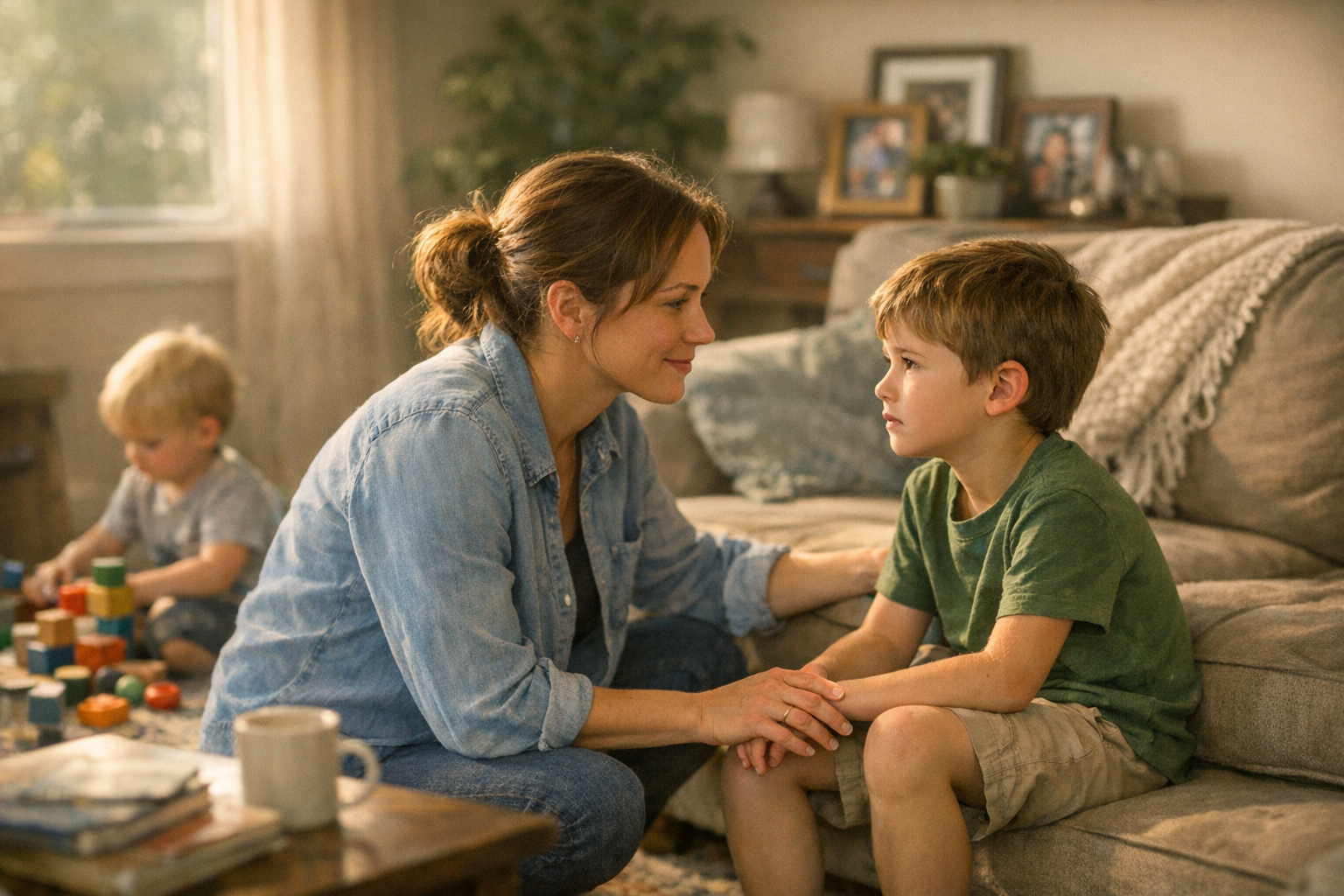
Age-Appropriate Consequences for Preschoolers and School-Age Kids
No child is perfect—so sooner or later, every parent runs into challenging behavior and has to decide what to do next.
The goal of discipline isn’t payback or humiliation. It’s to teach. And because every child is different, the most helpful consequences are the ones that fit your child’s age, temperament, and the situation.
Advice:
If you’re not sure why the behavior keeps happening, take a quick self-check first. The Parenting Test can help you spot what may be driving the struggle (attention-seeking, overstimulation, unclear limits, big feelings) so you can choose consequences that teach instead of escalate. Use the results to focus on a few realistic changes you can start this week.
One key rule to remember: don’t punish “on autopilot.” Try to match the consequence to the behavior—bigger consequences for bigger issues, lighter ones for small mistakes.
Before you respond, pause and imagine the situation from your child’s point of view. What led up to it? Were directions unclear? Were they tired, hungry, or overwhelmed? This doesn’t excuse the behavior—but it can help you choose a response that actually works.
Discipline Tools That Can Work (When Used Calmly and Consistently)
1) Show your disappointment—and explain why
Many kids care deeply about upsetting a parent. A calm, clear statement can be powerful: explain what wasn’t okay and why it matters.
Examples: “We don’t take other people’s things because they aren’t ours, and the owner would feel upset.” “We don’t play with my makeup. If it gets ruined, I can’t use it—and it’s special to me.”
Kids do best when rules come with reasons they can understand.
2) Use a firm, serious look (in proportion)
A warm smile communicates connection; a serious expression can communicate “stop and reset.” For some children, a firm look is enough to interrupt impulsive behavior.
Use it thoughtfully: for sensitive kids, it can feel overwhelming and may lead to tears, so keep it matched to the situation.
3) A brief sound of disapproval (without constant nagging)
A quick “mm-mm” or a quiet sigh can signal, “That choice isn’t okay,” and give your child a moment to reconsider.
Try not to overuse it—if it turns into constant grumbling, kids tune it out (and everyone feels worse).
4) The “neutral observer” approach (give space to self-correct)
This one can be hard for parents, but it’s valuable: let your child notice the problem and take the lead in fixing it.
If they spill something, they clean it up. If they made a mess, they help restore the space. If they broke something, they try to repair it (with your help if needed).
Keep the repair task age-appropriate and reasonable—this should teach responsibility, not feel like harsh labor.
5) A calm, respectful talk (the “moral” conversation)
A conversation can be a consequence when it helps a child reflect and learn. Share your viewpoint, but also give clear reasons and examples.
Your tone matters. Yelling may scare younger kids and often shuts down learning. Aim for steady and firm when needed.
Also keep it realistic—long lectures can drain both of you. Short, focused conversations tend to land better.
6) Take away a privilege (not a basic need)
If a child didn’t do homework and earned a poor grade, it may make sense to pause video games for the weekend.
Remove privileges (screen time, special activities) rather than basic needs. Sleep, food, safety, and appropriate supervision are never bargaining chips.
7) “Make-it-right” work (logical cleanup or repair)
Adults face consequences like fines or community service. A kid-friendly version is having your child clean up what they chose to damage or misuse.
If they drew on the table on purpose, they help wash it. Keep it reasonable—and try not to make all work feel like punishment. Ideally, kids learn that caring for a home is part of being in a family.
8) Time-out / a brief break to calm down
A time-out (or “reset break”) can help a child pause and regain control. Choose a quiet spot without screens or toys.
Briefly explain what happened and what needs to change, then step back for a short time. Avoid scary approaches (like locking a child in a dark room). Keep the length tied to age and what happened.
9) A direct apology (and, when appropriate, repairing harm)
Apologizing to someone they hurt teaches accountability and empathy.
If your child picked flowers from a neighbor’s garden, they can apologize—and, if it makes sense, help tidy the area later. The goal is learning how to repair relationships.
10) Strategic ignoring (for attention-seeking misbehavior)
Some behavior is designed to get a big reaction. When it’s safe to do so, you can remove your attention and reconnect once your child is calmer.
Explain it simply: “If you keep doing this, I’m going to step away. We’ll talk when you’re ready to be respectful.”
Be careful with this tool: children still need to feel loved and safe. The point is to avoid rewarding the behavior with extra attention—not to withhold connection for long periods.
11) Learning from natural consequences (within safe limits)
Sometimes a child learns best from what naturally follows a choice—when it’s minor and safe.
For example, splashing in puddles can lead to wet socks and discomfort. Your job is to keep the lesson safe and reasonable, not to let consequences become truly harmful.
12) Temporary restrictions for teens (used sparingly)
If a teen makes a serious choice, a temporary pause on certain social plans may be appropriate (for example, missing a party).
Use this thoughtfully. Friendships and peer belonging matter a lot, so avoid making social isolation your go-to consequence.
13) A story instead of punishment (especially for younger kids)
Stories help children understand feelings and choices at a safe distance. You can read books or make up a short story where a character makes a similar mistake, faces a problem, and then figures out a better path.
You can borrow familiar fairy tales or even a movie plot. What matters is that the character learns, repairs the situation, and chooses a better approach next time.
14) Create a “reconnection ritual” after discipline
It helps to have a simple ritual that signals the consequence is over and the relationship is secure.
This can be a hug, linking pinkies, or a small “reset” routine you create together (a mini dance, a clap-and-stomp sequence, or a silly handshake). The message is: “We’re okay, and we’re moving forward.”
Recommendation:
If you want a clearer, day-to-day plan, use the Parenting Test to pinpoint which discipline tools fit your child best right now. After you get your results, pick two consequences you can use consistently (like a repair task + a privilege pause) and one reconnection ritual to end conflicts. Consistency and calm follow-through usually make a bigger difference than “bigger” punishments.
Discipline works best when it’s fair, understandable, and connected to the behavior. When you focus on teaching—rather than shaming—you give your child something they can actually use the next time they’re frustrated, tempted, or overwhelmed.