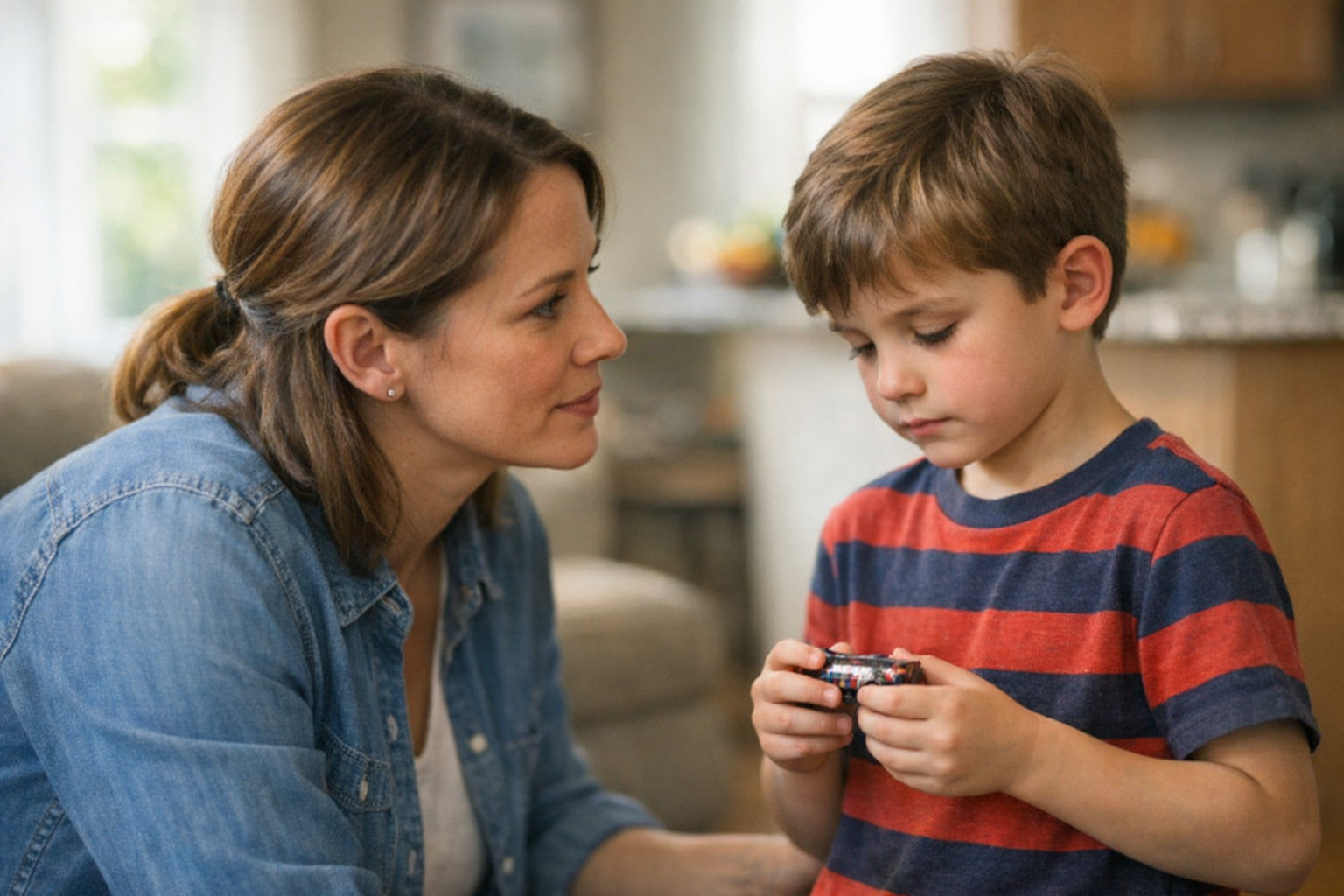
Why Kids Steal at School (Candy, Toys, Supplies, or Money)
Finding out your child took something at school can feel humiliating and scary—especially when peers, teachers, or administrators are involved. Many parents worry it means their child is “bad,” or that the school will label them.
In most cases, school stealing is a behavior problem with a solvable cause: missing skills, impulsivity, social pressure, stress, or unclear boundaries. Your response matters, but so does the school context—because triggers and opportunities often live in the classroom, lunchroom, hallway, or bus.
If you want a deeper look at why kids lie in the first place (and how lying connects to school behavior), this guide can help: Why do children tell lies. Causes of lying in kids.
Advice:
Before you email the teacher or question your child, take a breath and choose a calm plan. The Parenting Test can help you sort out whether this looks like impulse control, social pressure, unmet needs, or a boundary problem—and what conversation to have first. Use it to stay firm without shaming, especially when the school is watching how you respond.
School Stealing vs. Home Stealing: What’s Different?
At school, stealing is rarely just about the item. It can be tied to:
- Peer dynamics (fitting in, impressing others, fear of exclusion).
- High opportunity (open cubbies, backpacks, unattended coats, classroom prize bins).
- Fast-moving routines (transitions, crowded spaces, limited adult attention).
- Performance pressure (tests, behavior charts, “good kid” identity).
- Embarrassment about asking (for supplies, snacks, money for events).
That’s why the best plan is usually a teamwork plan: parent + child + teacher (and sometimes counselor/administrator), with clear next steps and a repair process.
First: Clarify What Happened Without Interrogating
Before consequences, get accurate details. Kids may minimize, deny, or change their story—especially if they feel panicked. Aim for a fact-finding conversation, not a courtroom.
Try: “Tell me what happened from start to finish.”
Then: “What were you feeling right before you took it?”
And: “What did you think would happen next?”
If you need more guidance for immediate next steps (including returning items and making amends), see: What to Do If You Catch Your Child Stealing (At a Store or at Home).
What to Ask the Teacher (Quick Collaboration Checklist)
Keep your message short, respectful, and specific. You’re trying to learn the context and reduce repeat opportunities.
Questions that help (and don’t escalate)
- Where and when did it happen (classroom, lunch, recess, bus, aftercare)?
- What item(s) were taken, and from whom (class supply, another student, staff)?
- Was anyone else involved (dare, group, “holding it for a friend”)?
- What happened right before (conflict, correction, game loss, transition)?
- How was it discovered (caught, reported, found in backpack)?
- Is this a first incident at school, or part of a pattern you’ve noticed?
- What supervision or storage changes are possible (assigned cubby, zip pouch, teacher hold of valuables)?
What to request (without demanding)
- A simple supervision plan for high-risk times (transitions, end of day, coat/backpack area).
- A private repair process when possible (to limit humiliation and gossip).
- A check-in/check-out for a short period if this is repeating (brief morning goal + end-of-day review).
Common School Scenarios (and What They Usually Mean)
Scenario 1: Taking snacks/candy from another student’s bag
Often means: impulsivity, hunger, sensory craving, or “it was right there.” Sometimes it’s also social (kids trading snacks, trying to look bold).
Parent move: Ask about hunger and access. Pack an extra snack if needed, and teach a script: “Can I trade?” or “Can I have one if I ask my parent first?”
Scenario 2: Taking school supplies (pencils, markers, erasers)
Often means: disorganization, embarrassment about not having supplies, or a rushed classroom routine where borrowing becomes “taking.”
Parent move: Create a simple supply system at home (extras in a pouch). Ask the teacher about classroom borrowing rules and labeling.
Scenario 3: Taking a small toy, trading card, or “cool” item
Often means: status seeking, envy, difficulty tolerating “not having,” or weak boundaries around ownership.
Parent move: Limit valuables brought to school for a while and practice coping skills for envy (“I want it” isn’t the same as “I can take it”).
Scenario 4: Taking money (from classmates, a teacher’s desk, or fundraiser envelopes)
Often means: bigger risk-taking, peer pressure, or a need the child is hiding (lost lunch money, being asked to pay for others).
Parent move: Treat this as serious. Collaborate with school staff, require meaningful repair, and ask gentle safety questions about coercion or bullying.
If this involves ongoing money issues or older kids, you may also want: Teen Lying and Stealing Money: What Parents Can Do.
A Step-by-Step Plan That Schools Usually Support
Step 1: Stop the behavior and secure the environment
- Return the item(s) promptly (through the teacher if appropriate).
- Reduce opportunity for a short period (no toys/cards at school; zip pouch; assigned seat/cubby).
Step 2: Repair harm (without public shaming)
- Apology that names the behavior: “I took your item. That was wrong.”
- Restitution when needed (replace or pay back).
- Repair act when appropriate (help teacher organize supplies, write a note, do a classroom job)—only if the school agrees and it won’t humiliate the child.
Step 3: Teach the missing skill (pick one)
- Asking: practice exact words for borrowing or requesting.
- Waiting: “Put it on a list, save for it, earn it.”
- Impulse pause: “Stop–Think–Do” or a simple self-talk script: “Not mine. Put it back.”
- Handling envy: name the feeling, choose a replacement action (tell teacher, walk away, get water).
Step 4: Set a clear consequence that matches the situation
Consequences work best when they are predictable and connected to trust.
- Loss of privilege related to the behavior (no store trips alone, no bringing valuables to school).
- Increased supervision (backpack checks for a short time, with a clear end date).
- Earning back trust (a simple chart focused on honesty and returning borrowed items).
What Not to Do (Common Mistakes That Backfire at School)
- Don’t force a public apology in front of peers. It can increase shame and retaliation.
- Don’t label your child (“thief,” “liar”). Label the behavior and the rule instead.
- Don’t rely on long lectures. Schools move fast; kids need short, repeatable skills.
- Don’t skip repair because you feel embarrassed. Repair is what rebuilds trust.
When to Seek Professional Help
If stealing is frequent, escalating, or paired with other concerns, consider talking with your pediatrician, a licensed mental health professional, or the school counselor. Extra support can be especially helpful if you notice:
- Stealing that continues despite consistent consequences and supervision.
- Big changes in mood, sleep, appetite, or school performance.
- Signs of bullying, coercion, or fear about going to school.
- Lying that seems persistent and intense, or patterns of rule-breaking across settings.
For general guidance on children’s mental health and when to get help, parents can review resources from the American Academy of Pediatrics and the CDC.
Tip:
If you’re unsure whether to focus more on consequences, skill-building, or school collaboration, use the Parenting Test as a quick decision aid. It can help you choose one or two clear priorities for the next week, so you don’t overwhelm your child—or yourself. Bring your notes from the results into your next conversation with the teacher or counselor.
A Closing Thought
School stealing can be stressful, but it’s also a chance to teach honesty, repair, and self-control in real-life situations. With a calm plan, consistent follow-through, and a cooperative approach with the school, many kids stop the behavior and rebuild trust step by step.