5 School Conflict-Resolution Steps for Kids (Peers, Teachers, and Group Work)
“I’m not friends with Mavis anymore. She went through my locker.”
“Kevin and I had to sit out the whole class because the teacher heard us arguing over a game.”
“I argued with my English teacher because he corrected me, and I didn’t do anything wrong.”
School conflicts can blow up fast because kids are managing emotions, friendships, and social pressure in front of an audience. The goal isn’t to make your child “never get mad.” It’s to help them stay safe, speak up respectfully, and solve what can be solved.
If you want a bigger set of family conflict skills (for home and beyond school), use this main guide: How to solve family problems and conflicts. Best conflict resolution techniques.
Advice:
If school conflicts keep repeating, it can help to step back and look for patterns: timing (before lunch?), triggers (teasing, correction, competition?), and your child’s usual reaction (shut down, snap back, people-please). The Parenting Test can help you identify which skills to focus on first so your coaching feels simpler and more consistent. Bring one small goal to your next conversation with your child, like “pause before responding” or “ask for a redo.”
Below are five kid-friendly steps tailored to common school situations: peer drama, group work, hallway incidents, and disagreements with teachers or coaches. Teach the steps at home, then practice them with short role-plays so your child can access them when they’re stressed.
Step 1: Name the School Problem Clearly (Not the Person)
Kids often jump to labels: “She’s mean,” “He’s a bully,” “The teacher hates me.” Coach your child to describe the problem in one sentence that a teacher could understand.
Quick script
Instead of: “You’re always trying to embarrass me.”
Try: “When you read my paper out loud, I feel embarrassed. I want you to stop.”
School-specific questions to help them pause
- What happened first, and what happened next?
- Is this a misunderstanding, a fairness issue (rules/turns), or a boundary issue (touching, teasing, property)?
- Is there any safety concern (threats, pushing, harassment)? If yes, get an adult right away.
- What do I want now: an apology, my space back, a rule followed, or help from an adult?
Step 2: Use a “Calm Body” Reset Before Talking
At school, tone and body language matter because adults may only catch the loudest 10 seconds. Teach a simple reset your child can do quietly.
- Breathe low and slow (in 4, out 6) one or two times.
- Hands to self, shoulders down, step back one pace.
- Use a neutral opener: “Wait,” “Hold on,” or “Can we restart?”
If the other person is escalating, your child can prioritize safety and exit: “I’m not doing this right now,” and move toward a teacher or a group of students.
Step 3: Follow “School-Safe” Conflict Rules
These rules keep your child credible with teachers and reduce the chance of detention-level escalation.
- One issue at a time. Don’t stack old complaints (“and last week you…”).
- No audience performance. If possible, step aside or lower your voice. Arguments grow when peers are watching.
- Use respectful words, even when you’re upset. Respectful doesn’t mean passive. It means firm without insults.
- Check understanding. “So you thought I cut you in line?”
- Say what you need next. “Please stop,” “Give it back,” “I want a turn,” “I need space.”
- Know when to stop talking. If it’s going in circles, your child can say, “We’re not solving it. I’m getting help.”
For more ideas on what to do in real school moments (especially younger kids), see: How to Handle Kid Conflicts at Preschool and School.
Step 4: Problem-Solve Like a Teammate (Especially in Group Work)
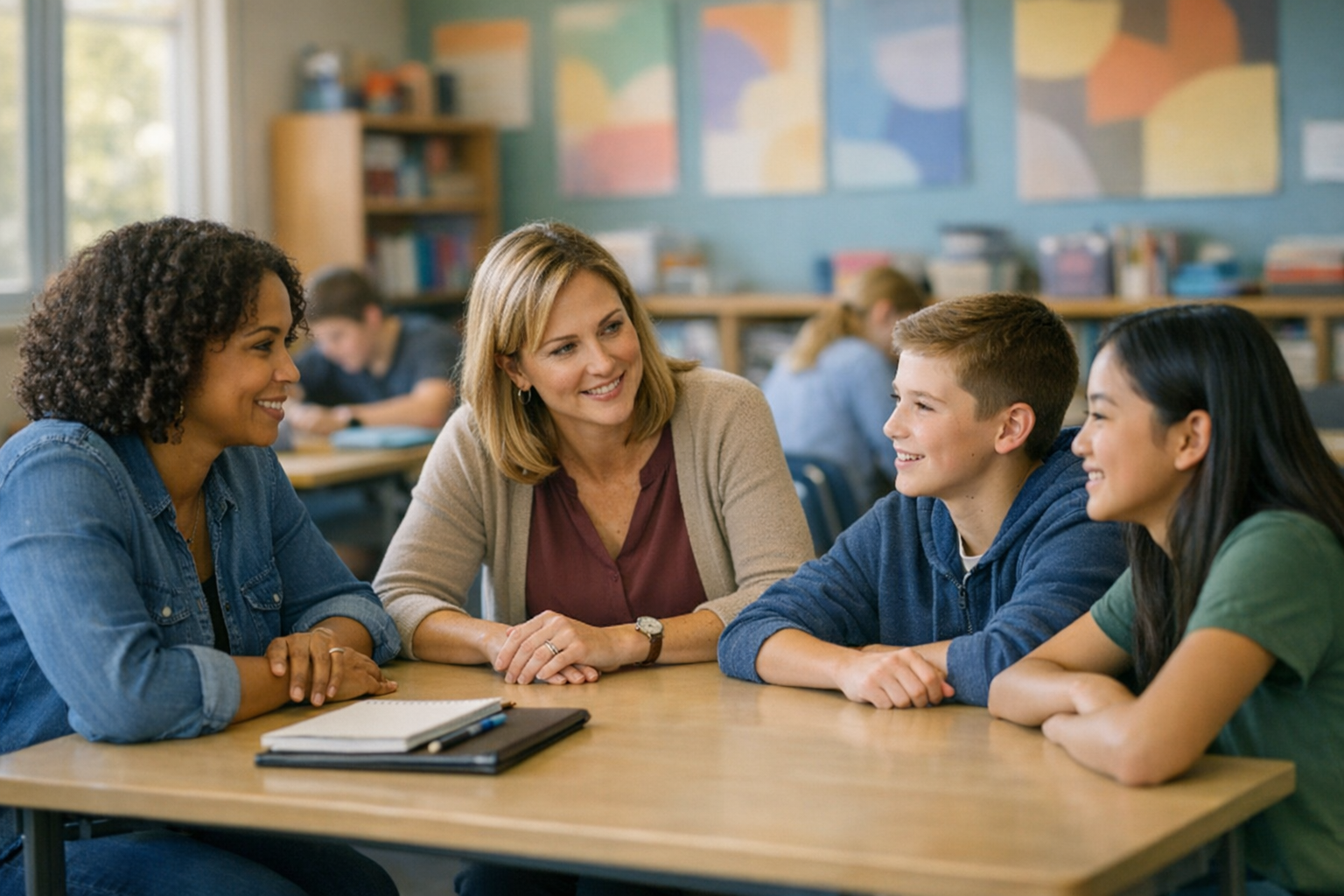
Group projects and team sports create predictable conflict: uneven effort, bossiness, excluded kids, and disagreements over roles. Teach your child to propose options that protect fairness.
Group-work solutions kids can suggest
- Split roles clearly: “Let’s decide who does slides, who writes, who presents.”
- Use a timer: “Each person gets 2 minutes to share their idea.”
- Make a simple plan: “What are we turning in today? What’s homework?”
- Ask for teacher structure: “Can you help us assign roles? We’re stuck.”
Remind your child: asking for structure is not tattling when the work can’t move forward or someone is being targeted.
Step 5: Repair the Relationship (Peers) or the Process (Teachers)
After the conflict, the “repair” is what protects your child’s reputation and helps school feel safer the next day.
Peer repair lines
- “I’m sorry I yelled. I was mad. Can we restart?”
- “I shouldn’t have touched your stuff. I won’t do that again.”
- “Next time, can you tell me directly instead of doing it in front of everyone?”
Teacher repair lines (respectful, not groveling)
- “I got defensive. I’d like to try that again.”
- “I didn’t understand the correction. Can you explain what you want me to do next time?”
- “I disagree, but I want to handle it respectfully. When can we talk?”
If your child struggles to generate respectful words in the moment, practice conflict language at home. This guide can help you teach those skills step-by-step: How to teach kids conflict resolution strategies.
School Conflict Checklists (Print-and-Practice)
Before school (30 seconds)
- “If someone annoys me today, I will pause, breathe, and use a calm voice.”
- One sentence to practice: “Please stop. I need space.”
After a conflict (2 minutes)
- What happened (facts only)?
- What was my part (if any)?
- What do I want to do differently next time?
- Do I need adult help to make this safe or fair?
When to Involve the School Right Away
Get a teacher, counselor, or administrator involved promptly if there’s physical aggression, threats, harassment (including online), repeated targeting, discrimination, or your child doesn’t feel safe attending class. If you’re unsure, you can still document what your child reports (dates, names, what was said/done) and request a meeting to clarify next steps.
For younger children, conflict practice can work best through play. If that fits your child, you can use: Preschool Conflict Resolution: Simple Games That Teach Problem-Solving.
Tip:
Pick one school scenario your child is dealing with right now (group project tension, lunchroom drama, getting corrected by a teacher) and role-play it for 5 minutes a day this week. If you want help choosing the best starting skill and wording for your child’s age and temperament, take the Parenting Test and use the results to guide your practice at home. You can also share a simple script with your child’s teacher so everyone is reinforcing the same approach.
Conflicts are part of school life, but kids do better when they have a repeatable plan: name the problem, reset, use school-safe rules, problem-solve, and repair. With steady practice, your child can handle more situations calmly and know when it’s time to ask adults for help.