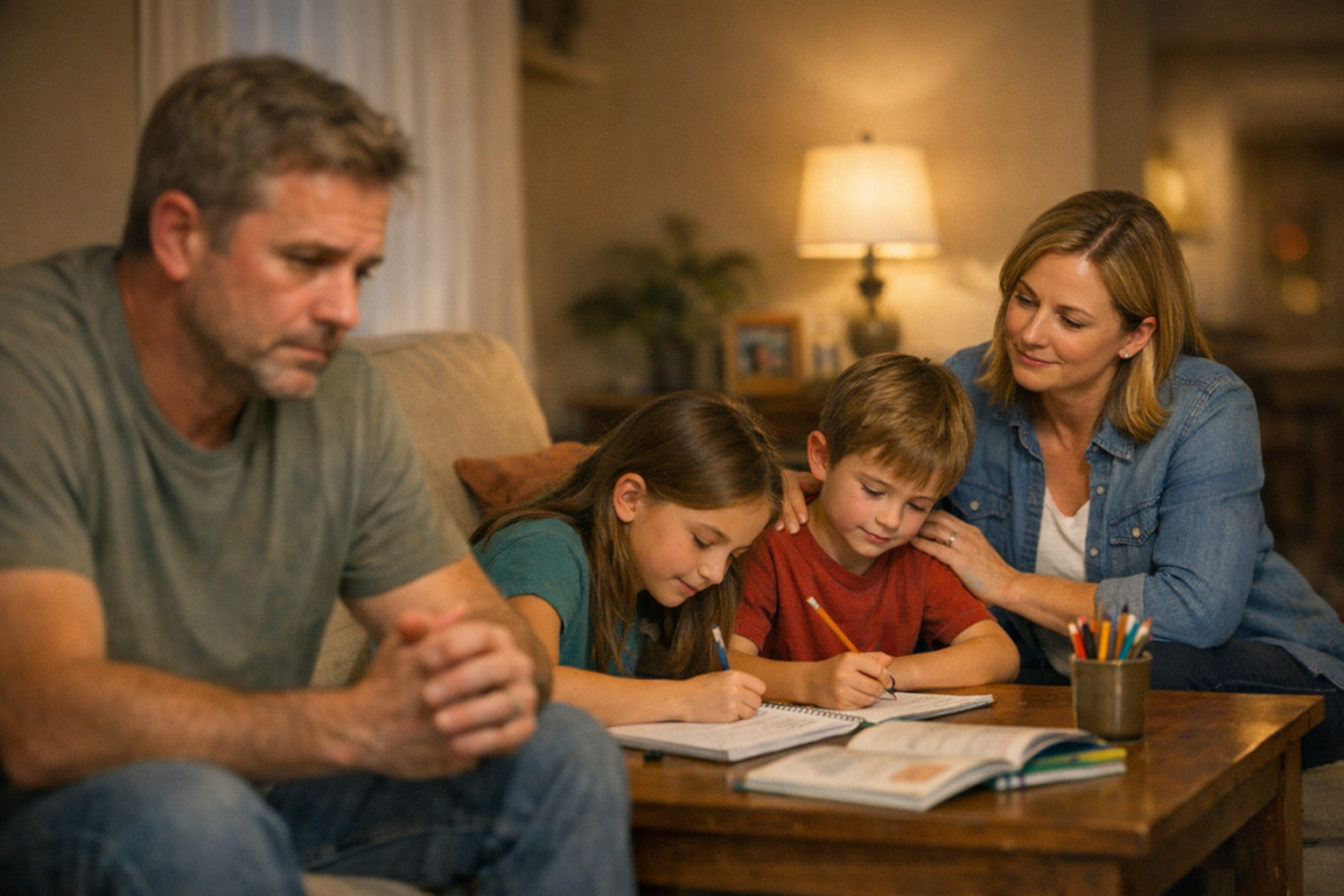
When a Parent Drinks and Kids Feel Unsteady: What to Watch For (and What to Say)
If alcohol use is changing the mood in your home—more tension, more arguments, more “walking on eggshells”—kids usually feel it even when adults try to hide it.
This guide focuses on one common scenario: a parent’s drinking is creating unpredictability at home, and you want concrete ways to support your child today (without making promises you can’t keep or turning your child into the “fixer”).
If you’re also worried your teen may be drinking, this main guide explains how alcohol can affect adolescent development: Teens and alcohol. Effects of alcohol on teenage brain, health and development.
Tip:
If you’re noticing more stress, shutdown, or acting out in your child, a structured check-in can help you separate “kid behavior” from the environment they’re reacting to. The Parenting Test can help you pinpoint patterns like inconsistency, conflict, or unclear boundaries that may be making home feel less safe. Use the results to pick one steady routine you can keep this week and one conversation you want to have calmly.
The Most Common Issue Kids React To: Unpredictability
What often impacts kids most isn’t a single incident—it’s the day-to-day uncertainty. A parent may be warm one night, irritable the next, and emotionally unavailable the next. Rules may shift. Plans may fall through. Tone can change quickly.
Over time, kids may develop mixed feelings toward the drinking parent: love and worry, closeness and anger, loyalty and the urge to distance themselves. That inner conflict can show up as behavior changes, anxiety, or “I don’t care” detachment.
For more on common household patterns when adults drink, see How Parents’ Alcohol Use Can Affect Kids: Common Patterns.
Quick Checklist: Signs Your Child May Be Struggling With a Parent’s Drinking
These signs can have many causes, but they’re common in alcohol-affected homes—especially when kids don’t know what to expect from one day to the next.
- Sleep changes (trouble falling asleep, nightmares, frequent waking)
- Increased irritability or mood swings
- More “parent-like” behavior (worrying about adults, taking over chores, managing siblings)
- Hypervigilance (watching faces/voices closely, scanning for conflict)
- School changes (drop in grades, avoidance, behavior referrals)
- Social shifts (withdrawal, people-pleasing, trouble trusting)
- Secrecy or protecting “family information”
- Somatic complaints (headaches, stomachaches) that increase around conflict
A Child’s “Coping Role” (and How to Respond Without Shaming)
Kids adapt to stress in ways that help them get through the day. These patterns aren’t a diagnosis—they’re survival skills that may need gentle re-direction.
- The Responsible One: tries to keep everything running. Your response: thank them for helping, then give them permission to be a kid again.
- The Peacemaker: tries to prevent blowups. Your response: reassure them that adult conflict is not their job to manage.
- The Adapter: reads the room and changes themselves constantly. Your response: create predictable routines and consistent rules.
- The Rebel: acts out to express chaos or pain. Your response: hold firm boundaries while naming the feeling underneath.
What to Say: Simple Scripts for the Non-Drinking (or Less-Affected) Parent
You don’t need a perfect speech. Kids do better with short, honest, age-appropriate words repeated over time.
Script 1: Name what your child is feeling (without over-explaining)
“I’ve noticed things feel tense at home sometimes. You might feel worried or confused. You’re not in trouble for feeling that.”
Script 2: Remove the child’s sense of responsibility
“This is an adult problem. You did not cause it, and it’s not your job to fix it.”
Script 3: Make a safety and routine promise you can keep
“Here’s what will stay the same: dinner is at 6, bedtime is at 8:30, and you can always come to me if you feel scared.”
Script 4: If your child asks, “Is Mom/Dad drunk?”
“I hear you. Something feels different, doesn’t it? I’m going to handle the adult part. Your job is to be safe and come to me if you’re worried.”
Script 5: If your child blames themselves
“I’m glad you told me. This is not because of anything you did. Adults are responsible for their choices.”
If you need help putting words to alcohol use in a way that’s truthful and compassionate, see How to Explain Alcoholism to a Child (With Compassion).
Boundaries That Protect Kids (Even When You Can’t Control the Drinking)
Boundaries work best when they’re specific, calm, and focused on safety—not punishment.
Start with these three:
- Access boundary: “If you’ve been drinking, you won’t drive the kids or supervise bath time.”
- Conflict boundary: “We won’t argue in front of the kids. If voices rise, we pause and talk later.”
- Routine boundary: “Homework/bedtime happens at the same time regardless of mood.”
If you anticipate pushback, keep your language brief and repeatable: “I’m not debating this. I’m keeping the kids safe.”
If You Suspect Your Teen Is Drinking Too
In some families, teen drinking and adult drinking can overlap—sometimes as a response to stress, sometimes due to access at home, and sometimes due to peers.
This next-step guide can help you recognize warning signs and plan what to do: How to Tell If Your Teen Is Drinking Alcohol (and What to Do Next).
When to Seek Professional Help (and What to Do in a Crisis)
If you’re concerned about safety, it’s reasonable to get outside support. Consider reaching out to your child’s pediatrician, a licensed mental health professional, or local support services if you notice:
- Any violence, threats, or unsafe supervision (including impaired driving with a child)
- Your child shows signs of depression, self-harm, panic, or trauma symptoms
- Escalating alcohol use or withdrawal symptoms in the drinking parent
- You feel unable to keep routines and safety stable
In an emergency or if someone is in immediate danger, call local emergency services right away.
For health guidance and prevention information, you can review resources from the CDC and the American Academy of Pediatrics (AAP). For information on alcohol use disorder and treatment approaches, the National Institute on Alcohol Abuse and Alcoholism (NIAAA) is also a helpful reference.
Advice:
If you’re unsure which changes will help your child feel safer first, focus on what you can control: routines, boundaries, and calm communication. The Parenting Test can help you identify the home dynamics most tied to insecurity (like inconsistency or conflict) so you can prioritize one or two realistic changes. If the results raise concerns you can’t address alone, bring them to a pediatrician or therapist as a starting point for support.
Even in hard situations, kids benefit from one steady adult who notices, listens, and keeps daily life predictable. Small, consistent steps—repeated over time—can restore a sense of safety and help your child stay connected to you.