Kids Afraid of Monsters at Night: What’s Really Going On
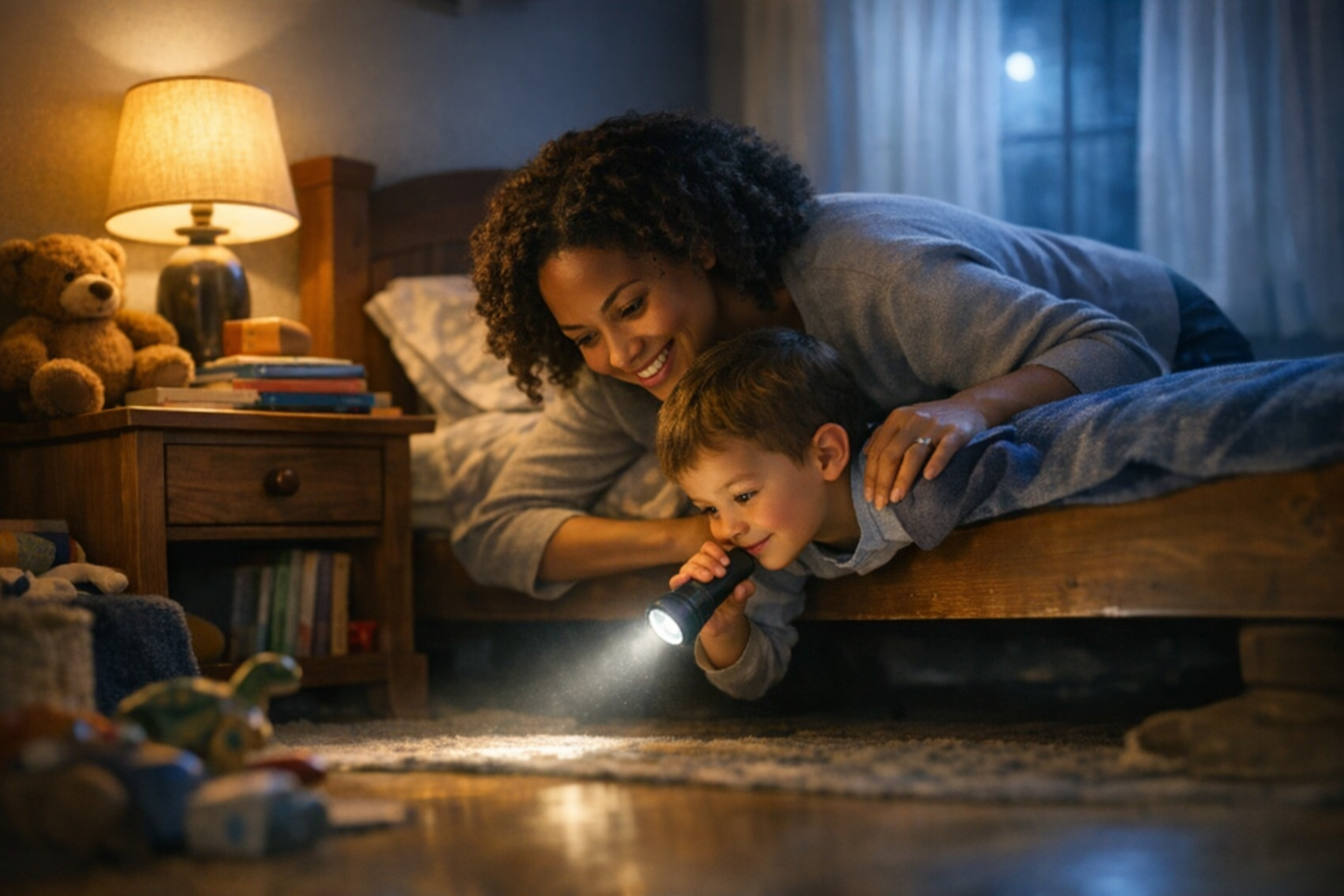
When your child insists there’s a monster under the bed, it can feel equal parts heartbreaking and exhausting—especially when it keeps everyone up.
Monster fears are common in early childhood and can flare up during stress, big transitions, or after exposure to spooky images. The goal isn’t to “argue them out of it,” but to help your child feel safe, calm their body, and rebuild confidence at bedtime.
If your child’s fears are happening alongside broader worries (separation anxiety, school stress, or frequent reassurance-seeking), this guide may also help: Helping an Anxious Child: Support for Toddlers to Teens.
Advice:
If monster fears are taking over bedtime, it can help to step back and notice what’s been changing—sleep schedule, stress at school, family transitions, or what your child is watching. The Parenting Test can help you pinpoint what your child may need most right now and choose a response that’s calm, consistent, and age-appropriate. Use it as a starting point for a simple plan you can stick with for a full week.
Why Kids Fear Monsters at Night (Common Causes)
Fear is a normal protective response. At night, kids have less sensory information (darkness, quiet, shadows), so their brains fill in the blanks—especially during strong imagination years.
- Developmental imagination (often ages 3–7): Pretend play is growing, and “not real” can still feel real.
- Stress and transitions: A new school year, moving, a new sibling, a parent traveling, or family conflict can show up as bedtime fears.
- Overtiredness: When kids are overtired, the brain has a harder time regulating fear and calming down.
- Scary or confusing media: Trailers, video game clips, news in the background, or older siblings’ content can plant vivid images.
- Reinforced reassurance loop: If the routine becomes “panic → parent checks repeatedly → relief,” your child may learn they need repeated checking to feel safe.
For more on fear themes that often show up at night (sleep, darkness, separation), see How to Help a Child Who’s Afraid of Sleep, School, or the Dark.
The 7-Step Bedtime Plan (Use for 7 Nights Before You Judge It)
Step 1: Validate the feeling (without validating the monster)
Keep it short, warm, and steady. Your job is to communicate safety, not debate.
Try: “That sounds scary. I’m here. We can handle this.”
Avoid: “There’s nothing there,” “Don’t be silly,” or long explanations that keep the fear conversation going.
Step 2: Name the fear and rate it
Fear grows when it’s vague. Help your child get specific, then use a simple scale.
- “Where does the monster feel like it is?”
- “What number is the fear—0 to 10?”
Reassure briefly, then shift to skills: “Okay, it’s a 7. Let’s bring it down to a 4.”
Step 3: Do one quick, consistent safety check (then stop)
If you check, keep it predictable and brief—30–60 seconds. Then you’re done for the night.
Script: “We’ll do one check together. After that, we use our calm plan and stay in bed.”
This avoids escalating into repeated checking, which can accidentally teach the brain that bedtime isn’t safe without rituals.
Step 4: Build a “calm body” routine (2–4 minutes)
Pick one or two calming skills and repeat nightly so your child’s body learns the pattern.
- Balloon breath: inhale gently, exhale slowly like letting air out
- Heavy hands: press palms together for 5 seconds, then relax
- 5-senses grounding: name 3 things you see, 2 you hear, 1 you feel
Practice these during the day too, so they’re easier at night.
Step 5: Add a comfort cue (one object, one phrase)
Choose one “safe item” and one short phrase that signals bedtime safety.
- Comfort cue: stuffed animal, special blanket, night light
- Phrase: “My room is safe. My grown-up is nearby. My body can rest.”
Keep it consistent. Consistency is what trains the nervous system.
Step 6: Set a clear reassurance boundary (loving, not harsh)
Tell your child what will happen after lights-out—before the fear spikes.
Example: “I’ll tuck you in, we’ll do one check, then I’ll come back in 5 minutes to peek in. After that, you stay in bed and use your calm tools.”
If they call out repeatedly, respond with minimal words and the same routine (brief, boring, consistent).
Step 7: Do a quick morning follow-up (teach, don’t rehash)
In the morning, praise the skill—not the absence of fear.
Try: “You felt scared and you practiced balloon breaths. That’s brave.”
Then problem-solve one small tweak for tonight (earlier bedtime, less screen time, different night light).
Troubleshooting: What to Do When the Plan Isn’t Working
If your child wants you to stay until they fall asleep
Use a “gradual fade” instead of an all-or-nothing approach.
- Night 1–2: Sit next to bed for 3–5 minutes (quiet, low attention).
- Night 3–4: Move to the doorway.
- Night 5–7: Brief check-ins at set times.
Explain the plan in the daytime so it doesn’t feel like a surprise.
If fears got worse after a scary show or story
Reset media quickly for 2 weeks. Stick to calm, age-appropriate content and avoid anything with suspenseful music, “monster” villains, or jump-scares.
Then help your child re-frame the image: “That was pretend. Your brain saved the picture, and now it’s popping up at night. We can teach your brain it’s safe.”
If your child keeps leaving their bed
Walk them back calmly and quietly, every time, with the same phrase.
Script: “It’s sleep time. I’ll walk you back.”
Long talks at 2 a.m. can accidentally become a reward for getting out of bed.
If nightmares are the main issue
Nightmares are common and can increase during stress. Offer comfort, then return to the routine.
- Brief comfort: “That was a scary dream. You’re safe.”
- Grounding: “Look around—tell me three things you see.”
- Back to bed with a predictable plan.
By Age: What Helps Most (Toddlers to Tweens)
Ages 2–3: Keep it simple and sensory
- Use a night light and a short, predictable routine.
- Offer one comfort object and one phrase repeated nightly.
- Avoid long explanations; toddlers respond best to calm tone and repetition.
If your toddler seems fearful about many everyday things, you may also find this helpful: Common toddler anxieties, irrational fears and phobias.
Ages 4–6: Imagination is big—use play in the daytime
- Daytime “brave practice”: check the closet together, turn on lights, label shadows.
- Draw the monster, then change the story (make it silly, small, or friendly).
- Teach one calming skill and practice when they’re already calm.
Ages 7–10: Focus on skills and independence
- Use the fear-rating scale and track progress (“7 down to 4”).
- Create a written “night plan” together (3 steps) and post it in their room.
- Set predictable check-ins, then gradually reduce them.
If your child seems on high alert about lots of things (not just bedtime), this may help you put it in context: Why Your 2–10-Year-Old Seems Scared of Everything.
Tweens and teens: Treat it like anxiety, not “baby stuff”
Older kids may not say “monsters,” but they can still feel unsafe at night (intruder worries, panic symptoms, racing thoughts). Encourage:
- Less late-night scrolling (especially scary content or news)
- A consistent sleep schedule
- Skills that calm the body (slow breathing, muscle relaxation)
- Problem-solving during daytime, not at midnight
When to Seek Professional Help
Consider talking with your pediatrician or a licensed mental health professional if:
- Fears last more than a few weeks and are worsening
- Your child can’t function well at school or in daytime activities due to anxiety or sleep loss
- Night fears come with frequent panic symptoms (intense chest tightness, dizziness, feeling unable to breathe)
- Your child has trauma exposure, recurring severe nightmares, or persistent intrusive thoughts
- There are signs of self-harm or your child talks about not wanting to live (seek urgent help immediately)
Trusted references include the American Academy of Pediatrics (AAP) and the American Psychological Association (APA) for guidance on child anxiety and when to get support.
Tip:
If you’re not sure whether your child needs more reassurance, firmer boundaries, or different calming skills, the Parenting Test can help you choose a response style that fits your child’s temperament and your family’s routines. After you get your results, pick just one bedtime change to start and stick with it for a week. Small, consistent steps usually work better than a total bedtime overhaul.
With steady routines, brief reassurance, and a simple “calm plan,” most kids move through monster fears over time. You’re not trying to eliminate fear overnight—you’re teaching your child, night after night, that they can feel scared and still settle back into sleep.