Why Your 2–10-Year-Old Seems Scared of Everything
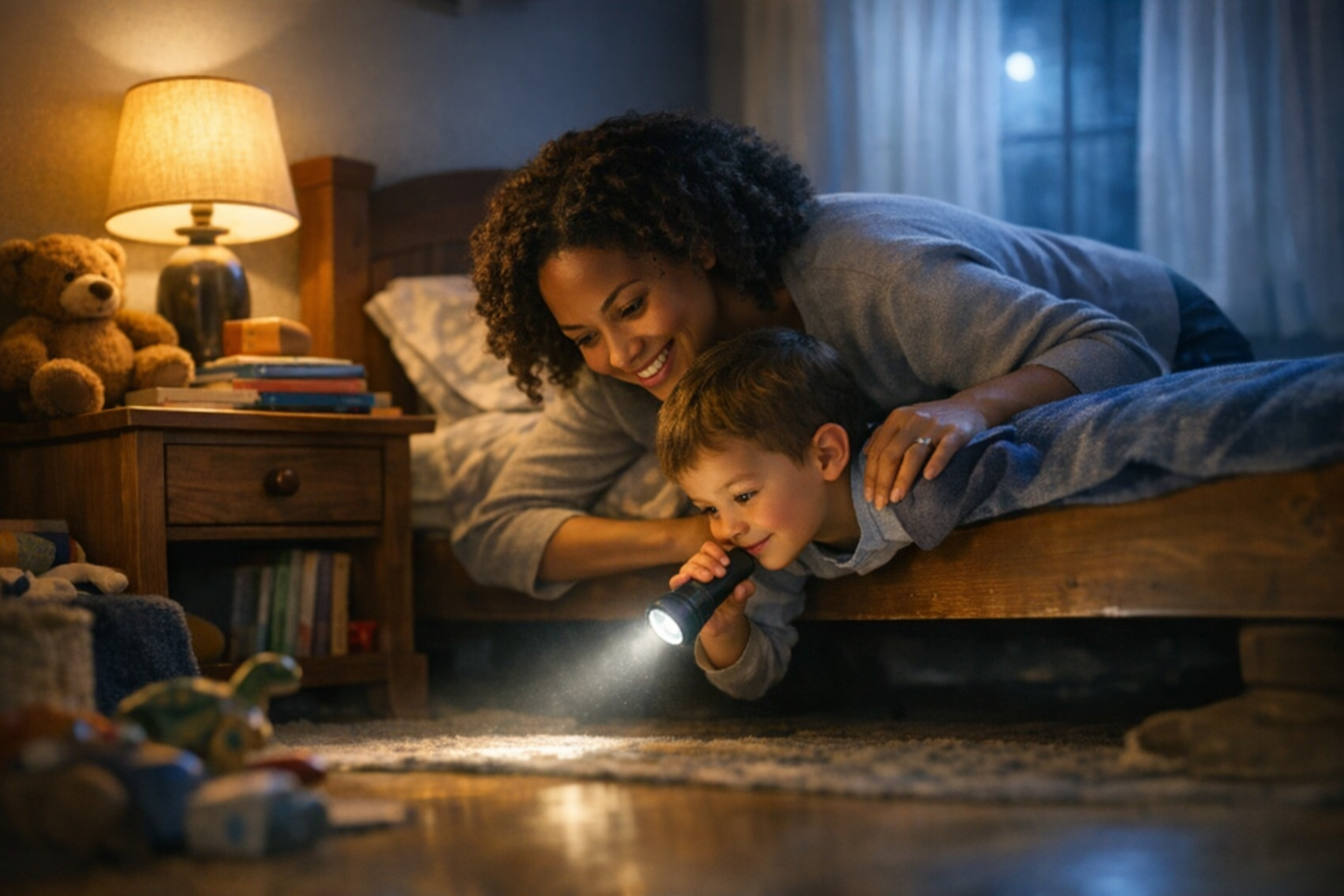
If your child is suddenly scared of lots of things (the dark, the bathroom fan, dogs, getting their hair washed, sleeping alone), it can feel like fear is taking over your whole day.
This guide focuses on one common scenario: fears that “stack up” in ages 2–10 and start driving family routines. You’ll get clear scripts, a quick checklist to spot patterns, and a step-by-step plan you can repeat.
For a broader overview of anxiety from toddlers through teens, see Helping an Anxious Child: Support for Toddlers to Teens.
Advice:
When fears show up all day long, it helps to step back and notice the pattern, not just the moment. Write down the top three triggers, the time of day, and what your child asks for (you staying, lights on, avoiding the situation). Take the Parenting Test to organize what you’re seeing and choose a steady response you can repeat without escalating the fear.
The “Fear Stack”: Why It Can Look Like They’re Scared of Everything
Kids can have more than one fear at a time. A new fear may appear before the old one fades, especially during big developmental changes (new preschool class, learning to swim, moving bedrooms, losing a pet, starting school).
Fear can also spread: if a child feels shaky at bedtime, they may become more sensitive during the day too. What you might be seeing is not “everything is scary,” but a nervous system that’s on high alert.
Clues you’re dealing with a fear stack (not just one fear)
- Your child avoids multiple situations: sleep, new places, certain rooms, certain people, certain activities.
- The fear shifts quickly: once one worry calms down, another pops up.
- Big reactions seem to come “out of nowhere,” especially when hungry, tired, or rushed.
- Your child needs lots of reassurance (repeating the same questions) but feels better only briefly.
What’s Often Typical by Age (Short, Practical Overview)
Fears are a normal part of development, and they often change as imagination and understanding grow. This quick list can help you decide what’s typical and what may need extra support.
Ages 2–3
- Separation fears (especially at drop-off or bedtime)
- Strangers or unfamiliar adults
- Loud noises, animals, getting hurt
Ages 4–6
- Monsters, “bad guys,” scary shadows or sounds
- Darkness and being alone
- Bad dreams and bedtime worries
Ages 7–10
- School worries (mistakes, being late, tests, speaking up)
- More realistic fears: storms, fires, getting sick, news events
- Social fears: being left out, teased, embarrassed
If nighttime fears are the biggest issue in your home, you may also want How to Help a Child Who’s Afraid of Sleep, School, or the Dark and Kids Afraid of Monsters at Night? Calming Ways to Help.
Quick Checklist: What’s Fueling the Fear Stack?
Use this as a fast “scan” before you assume your child is being dramatic or stubborn.
- Sleep debt: Later bedtime, nightmares, new night wakings, snoring, or a big schedule change.
- Transitions: Starting school, new teacher, new childcare, moving homes, traveling.
- Stress exposure: Conflict at home, scary conversations overheard, family illness, loss, or major life events.
- Scary media: Movies, videos, games, or older siblings’ content (even if “they didn’t look scared”).
- Reassurance loop: You answer the question 20 times, but the anxiety returns 5 minutes later.
- Avoidance grows: Your child’s world is getting smaller (more refusal, more “carry me,” more staying close).
For deeper background on why fears form and how phobias can develop, see Fear in child psychology. How to help my child to deal with fears and phobias.
What to Say in the Moment (Scripts That Don’t Feed the Fear)
The goal is to be warm and confident at the same time: you’re not arguing with the fear, and you’re not letting fear run the plan.
Script 1: Name it + confidence
“You’re feeling scared. I’m here. We can handle this.”
Script 2: Validate without agreeing the danger is real
“It feels really real to your body. My job is to keep you safe, and we’re safe right now.”
Script 3: Offer a small next step (not a debate)
“First we stand in the doorway for 10 seconds. Then we decide the next step.”
Script 4: End the reassurance loop
“I already answered that. My answer won’t change. Let’s do our calm breaths and then we’ll do the first step.”
What to avoid (because it often backfires)
- Shaming: “Don’t be a baby.”
- Dismissing: “There’s nothing to be scared of.”
- Scare tactics: Threats or “the boogeyman” to get compliance.
- Constant warnings: “Be careful!” all day long, which can teach the world is dangerous.
The 10-Minute Daily “Bravery Practice” Plan
If fears are piling up, pick one fear to work on first (usually the one disrupting sleep or school). Bravery practice works best when it’s short, consistent, and planned for a calm time of day.
Step 1: Choose one target
- Example: “Walk into the bathroom alone to wash hands.”
- Example: “Stay in bed while parent stands at the doorway.”
Step 2: Make a 5-step ladder
- Step 1: Stand with parent at the doorway for 10 seconds.
- Step 2: Stand one step inside for 10 seconds.
- Step 3: Turn on the light and touch the sink.
- Step 4: Wash hands while parent stands nearby.
- Step 5: Wash hands while parent waits outside the door.
Step 3: Pick one coping skill
- Balloon breathing: slow inhale 3 seconds, slow exhale 4 seconds, repeat 3 times.
- Muscle squeeze: squeeze fists for 3 seconds, release for 3 seconds, repeat 3 times.
- Brave phrase: “I can feel scared and still do it.”
Step 4: Reward effort (not avoidance)
Use specific praise right after the step: “You did the brave step even though your body felt worried.” Keep rewards small and simple (stickers, choosing the bedtime story, extra cuddle time).
When to Seek Professional Help
If fear is intense, long-lasting, or shrinking your child’s life, it’s reasonable to talk with your pediatrician or a licensed child therapist. Evidence-based treatments (like cognitive behavioral therapy) can be very helpful for anxiety in children.
Consider getting extra help if:
- Fear or worry lasts for weeks and is getting worse, not better.
- Your child avoids school, sleep, bathrooms, leaving home, or everyday activities.
- There are frequent panic-like episodes (racing heart, shaking, trouble breathing) or severe meltdowns tied to fear.
- You see significant changes in sleep, appetite, mood, or friendships.
- Your child talks about self-harm or not wanting to be alive, or you’re worried about safety.
For trustworthy background on childhood anxiety and when to seek care, you can review guidance from the American Academy of Pediatrics and the American Psychological Association.
Tip:
If you’re unsure whether your child’s fears are within the typical range or starting to interfere with daily life, it helps to track patterns for one week: when fears happen, what they avoid, and what helps them recover. Bring those notes to your pediatrician or therapist so you can get targeted support. You can also take the Parenting Test to clarify your next best steps and build a simple plan you can stick with at home.
Most kids become braver not from one big “pep talk,” but from repeated, small experiences of coping successfully. With a calm script, a simple practice ladder, and consistent follow-through, fears usually loosen their grip over time.