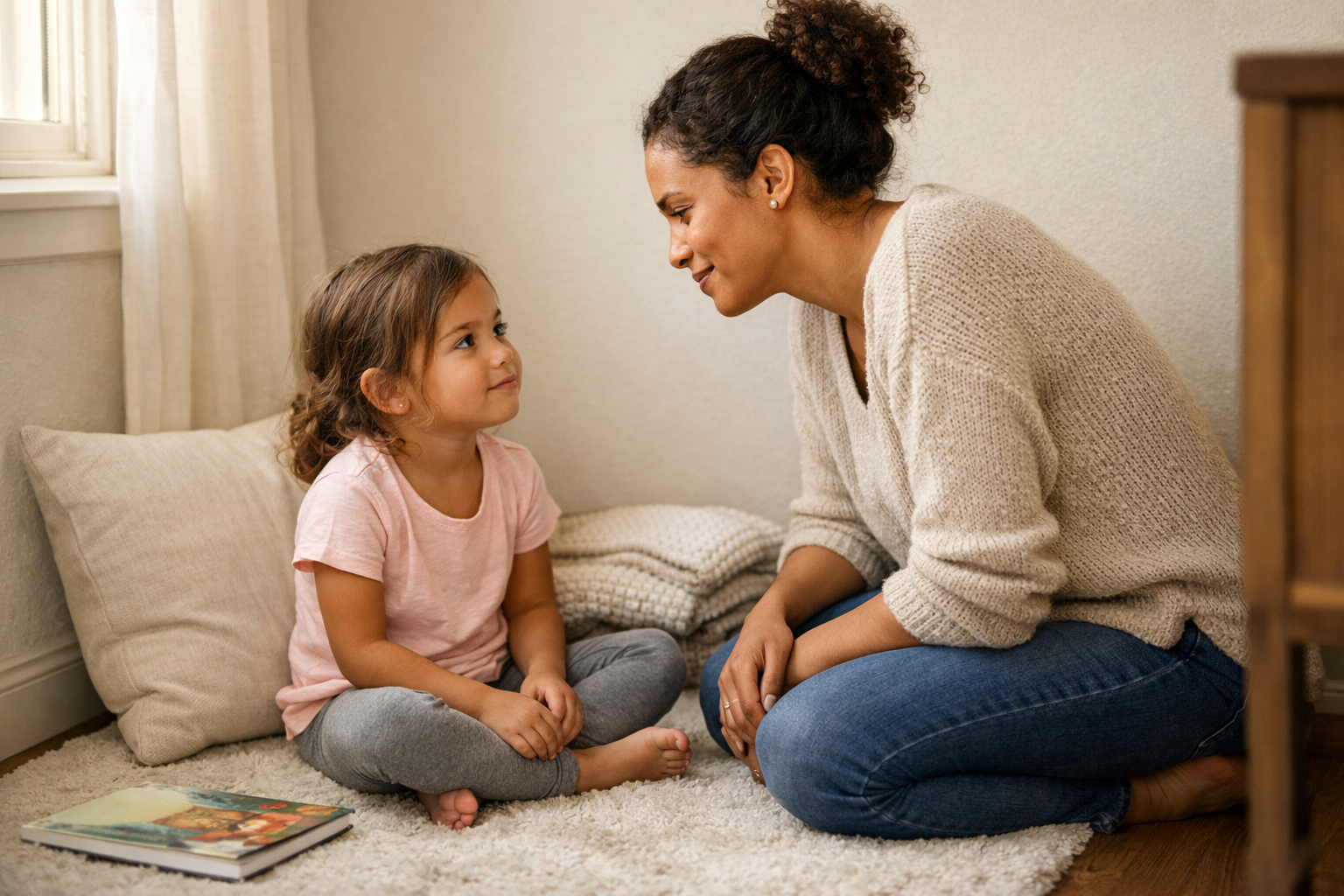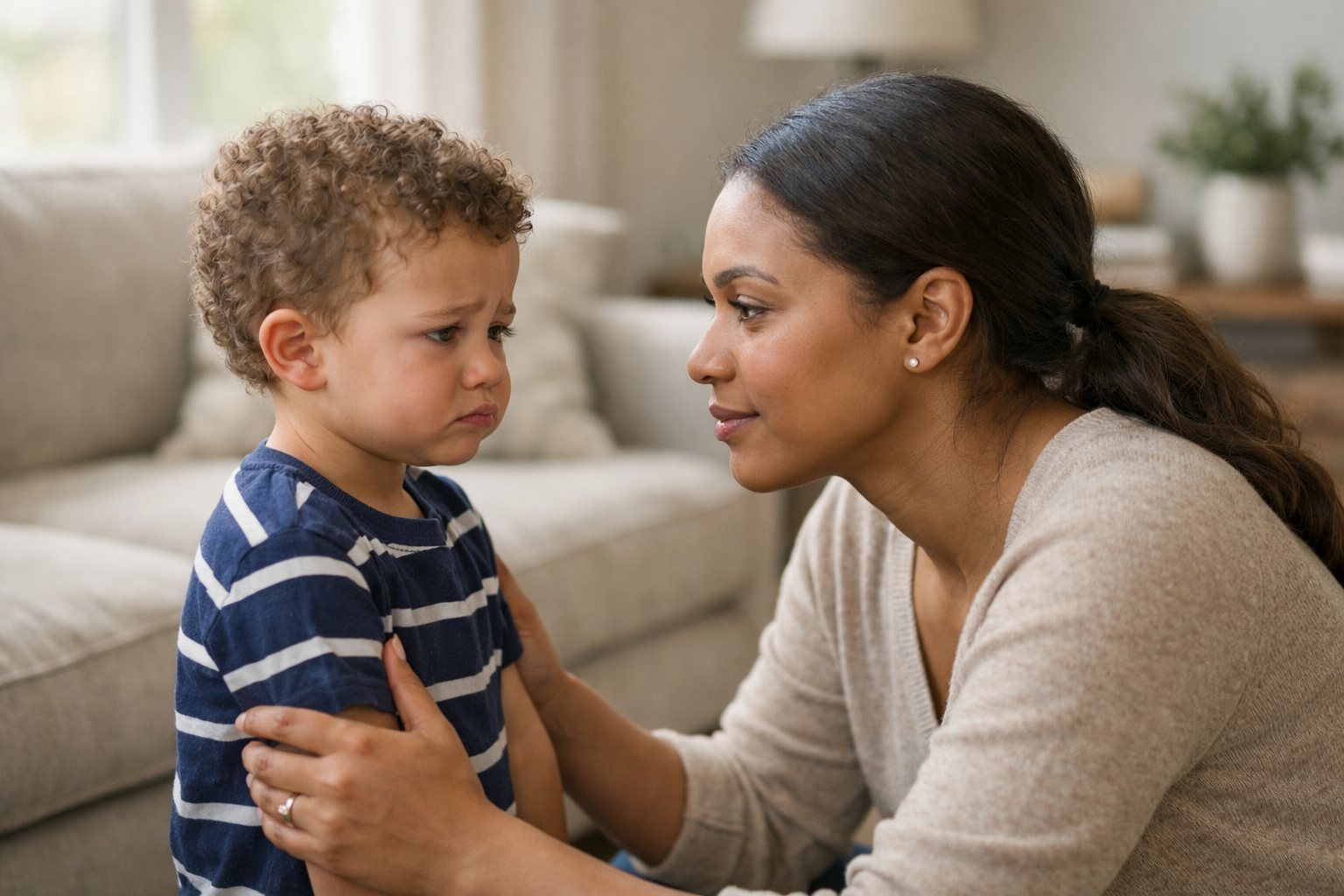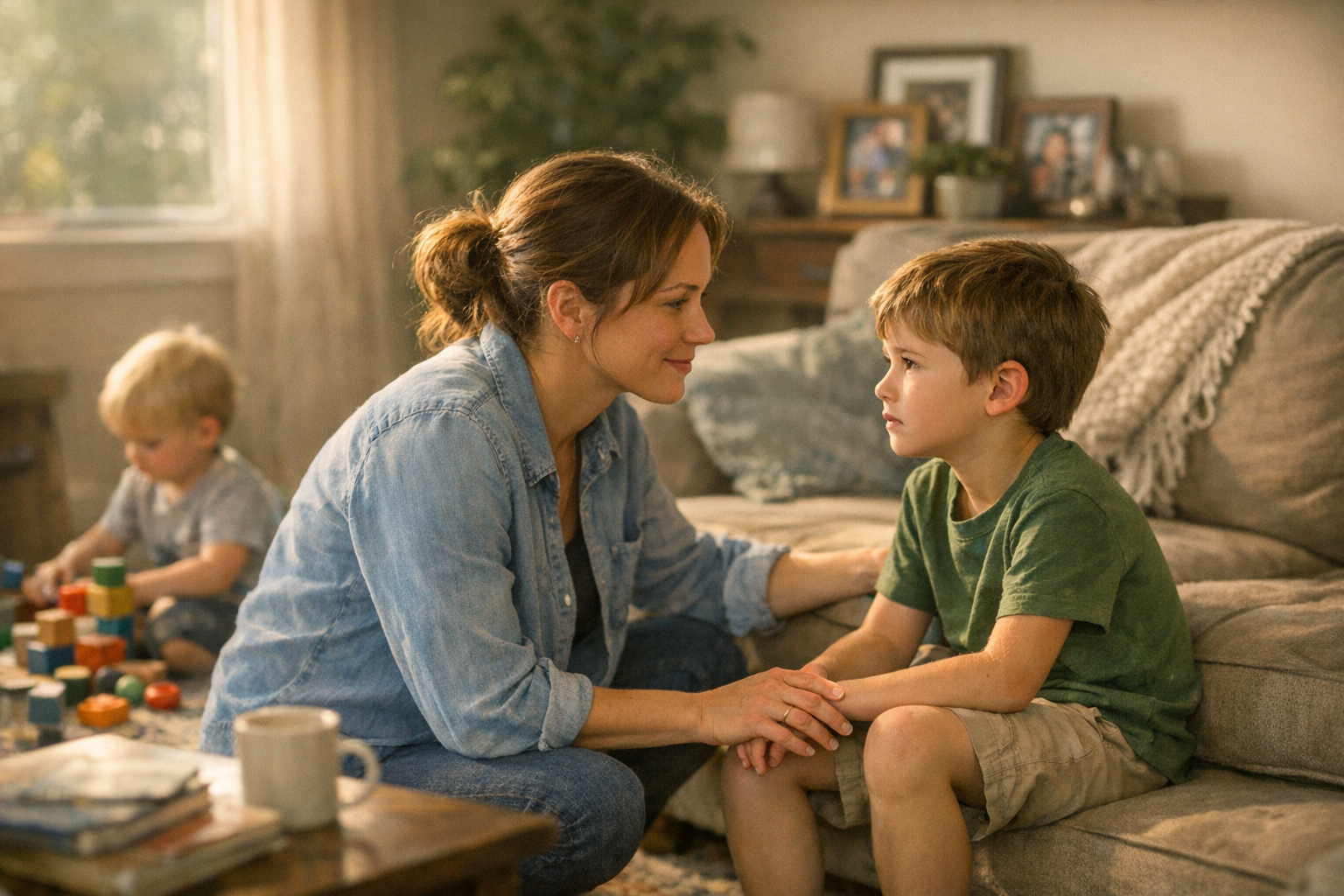
Helping an Anxious Child (Toddlers to Teens): Signs, Scripts, and Age-by-Age Support
Many parents find anxiety behaviors—constant reassurance-seeking, avoidance, stomachaches, or big reactions to small changes—more confusing than tantrums. Kids may get mislabeled as “too sensitive” or “dramatic,” and adults sometimes respond with pushing, teasing, or frustration.
Most kids worry sometimes. The goal isn’t to remove all worry—it’s to help your child feel safe enough to face everyday challenges, build coping skills, and regain confidence over time.
If you want a broader, step-by-step overview for your child’s age and situation, start with this main guide: Helping an Anxious Child: Support for Toddlers to Teens.
Advice:
If you’re unsure whether you’re seeing typical worry or anxiety that’s starting to interfere with daily life, a structured check-in can help. The Parenting Test can help you organize what you’re noticing and choose a practical next step to try at home. Use the results as a conversation starter with other caregivers or a professional if needed.
Start here / In this guide
Use this page as your “home base” for understanding child anxiety and choosing the right next article for your situation.
- Child Anxiety. Symptoms
- Anxious Child: How Can You Help?
- Anxiety that my kid can't cope with. How to help toddlers and young children to deal with anxiety
- Common toddler anxieties, irrational fears and phobias
- Fear in child psychology. How to help my child to deal with fears and phobias
- How to Help a Child Who’s Afraid of Sleep, School, or the Dark
- Why Your 2–10-Year-Old Seems Scared of Everything
- Kids Afraid of Monsters at Night? Calming Ways to Help
- My child feels anxiety about school. 9 ways how to help deal with such a problem
- Top stressors for children. How to deal with anxiety at school and relieve stress
- How to Help Kids Manage Stress: Practical Parenting Strategies
- How to help a teenager with anxiety. Top 10 stress management tips and techniques
What anxiety can look like in kids (and why it’s not “bad behavior”)
Anxiety is the brain’s alarm system. In kids, it often shows up as avoidance (“I can’t”), anger (“Stop asking me!”), perfectionism (“It has to be right”), or physical complaints (headaches, nausea) instead of clear words like “I feel anxious.”
When anxiety spikes, your child may genuinely feel unsafe—even if the situation is objectively okay. That’s why the most effective support is usually: (1) calm connection, (2) clear boundaries, and (3) small, planned practice with the feared situation.
If you’re trying to decide whether your child’s pattern fits anxiety, start with Child Anxiety. Symptoms.
Quick checklist: Signs anxiety may be interfering with life
Consider extra support when you notice anxiety happening often and affecting school, sleep, friendships, or family routines. Common signs include:
- Frequent reassurance-seeking (“Are you sure?” “What if…?”) that returns quickly
- Avoiding age-appropriate activities (school, sleepovers, sports, talking to adults)
- Big distress at separation or transitions
- Physical symptoms tied to stress (stomachaches, headaches, nausea)
- Sleep problems: trouble falling asleep, nightmares, frequent waking
- Perfectionism, intense fear of mistakes, or refusing to try unless “certain”
- Meltdowns, irritability, or shutdowns that seem out of proportion
- Difficulty concentrating when worried
For a practical “what to do next” plan, see Anxious Child: How Can You Help?.
Three parenting moves that help most (and what to avoid)
1) Name the feeling without feeding the fear
Try: “You’re feeling really nervous. I’m here.”
Avoid: “There’s nothing to be scared of” (often feels dismissive) or long explanations in the moment (can ramp anxiety up).
2) Keep boundaries steady while offering warmth
Try: “I won’t let you skip school, and I will help you through the hard part.”
Avoid: moving the goalposts daily, negotiating for long stretches, or accidentally teaching that anxiety leads to escape.
3) Coach coping skills when your child is calm
Skills land best outside the crisis. Pick one tool, practice briefly, then praise effort.
- Breathing: “Smell the soup, cool the soup” (inhale/exhale slowly)
- Muscle reset: “Squeeze your fists for 5 seconds, then let go”
- Worry plan: “What’s one small step? Who can help? What will we do if it’s hard?”
Scripts you can use today (reassurance without getting stuck)
Use these as starting points and keep your tone calm and brief.
- When your child asks repeated “What if…?” questions: “That sounds like a worry question. Let’s do our plan: one breath, one step.”
- When your child wants you to promise nothing bad will happen: “I can’t promise that. I can promise we’ll handle it together.”
- When your child refuses: “It’s okay to feel nervous. We’re still doing it, and we’ll start small.”
- When your child panics: “Your body is sounding an alarm. Let’s help your body feel safe: feet on the floor, slow breath, look around.”
- After a hard moment: “That was tough, and you did it. What helped even a little?”
Age-by-age guidance (toddlers to teens)
Toddlers & preschoolers (ages 1–5): build safety and predictability
Little kids don’t have mature “self-talk” yet. They borrow calm from you and rely on routines.
What helps most
- Predictable routines: consistent wake, meals, bedtime, and goodbye rituals
- Preview changes: “First shoes, then car, then daycare”
- Practice brave moments through play: stuffed animals “go to the doctor,” dolls “try the slide”
- Offer a helper job: “Can you hold the list?” or “Carry the napkins”
- Short goodbyes: warm, confident, and consistent
Common situations to match with the right article
- Frequent toddler fears and phobias: Common toddler anxieties, irrational fears and phobias
- When your young child feels overwhelmed and can’t cope: Anxiety that my kid can't cope with. How to help toddlers and young children to deal with anxiety
- Fear of sleep, the dark, or nighttime worries: How to Help a Child Who’s Afraid of Sleep, School, or the Dark and Kids Afraid of Monsters at Night? Calming Ways to Help
School-age kids (ages 6–12): teach skills and practice bravery in small steps
At this age, you can start naming patterns and practicing coping skills on purpose—without turning every day into “anxiety talk.”
What helps most
- Specific praise: “You raised your hand even though you felt nervous.”
- Problem-solving routine: identify the worry, choose one small action, then debrief
- Gentle exposure: tiny steps toward the feared situation, repeated often
- Reduce accidental “rescuing”: support your child through discomfort rather than removing the challenge
- Sleep and movement: both strongly influence mood and coping
School anxiety and stress
If mornings are a battle, your child avoids schoolwork, or worry spikes around tests or social situations, focus on school-specific strategies.
- School refusal, nervousness, or overwhelm: My child feels anxiety about school. 9 ways how to help deal with such a problem
- Common school stressors and how to reduce daily pressure: Top stressors for children. How to deal with anxiety at school and relieve stress
- Broader stress support for kids: How to Help Kids Manage Stress: Practical Parenting Strategies
Teens (ages 13–18): protect connection and build autonomy
Teen anxiety often looks like avoidance, irritability, procrastination, perfectionism, or shutting down. The best entry point is usually your relationship—not a lecture.
Conversation starters that don’t backfire
- Open, not interrogating: “What’s been the hardest part of your day lately?”
- Permission-based: “Do you want ideas, or do you just want me to listen?”
- Normalize + empower: “A lot of people feel this way. Let’s find what helps you handle it.”
Boundaries that still feel supportive
- School and responsibilities stay in place (with accommodations when appropriate), while you help your teen problem-solve barriers.
- Reduce shame: focus on skills and next steps, not character (“lazy,” “dramatic”).
- Encourage professional support when symptoms are persistent or severe (see section below).
For teen-specific tools and coping techniques, read How to help a teenager with anxiety. Top 10 stress management tips and techniques.
Fear vs. anxiety: a simple way to tell what you’re dealing with
Fear is usually about a specific thing (dogs, shots, the dark). Anxiety often spreads into “what if” thinking and anticipates threats.
- If your child’s distress centers on a specific fear or phobia, see Fear in child psychology. How to help my child to deal with fears and phobias.
- If your child seems fearful about many things across ages 2–10, see Why Your 2–10-Year-Old Seems Scared of Everything.
When to seek professional help
Consider talking with your pediatrician, a licensed child therapist, or a school counselor if:
- Anxiety lasts weeks to months and is getting worse
- Your child avoids school, can’t sleep well, or stops doing normal activities
- There are frequent panic-like episodes (racing heart, dizziness, feeling out of control)
- You see significant changes in eating, mood, or social connection
- Your child talks about self-harm, hopelessness, or not wanting to be here (seek urgent help right away)
Reliable information and screening guidance are available through organizations like the American Academy of Pediatrics (AAP), the CDC, the APA, and the NHS.
Tip:
If you’d like a simple plan for what to try first, take the Parenting Test and pick one target for the next 14 days (sleep routine, morning transitions, reassurance boundaries, or small exposure practice). Track one or two signs (like fewer meltdowns at drop-off or quicker recovery after worry) so you can see what’s actually helping. If progress is limited, those notes also make it easier to talk with your pediatrician or therapist.
With steady support, most kids can learn that worry is a feeling—not a fact—and that they can do hard things a little at a time. Your calm presence, consistent boundaries, and small practice steps add up.