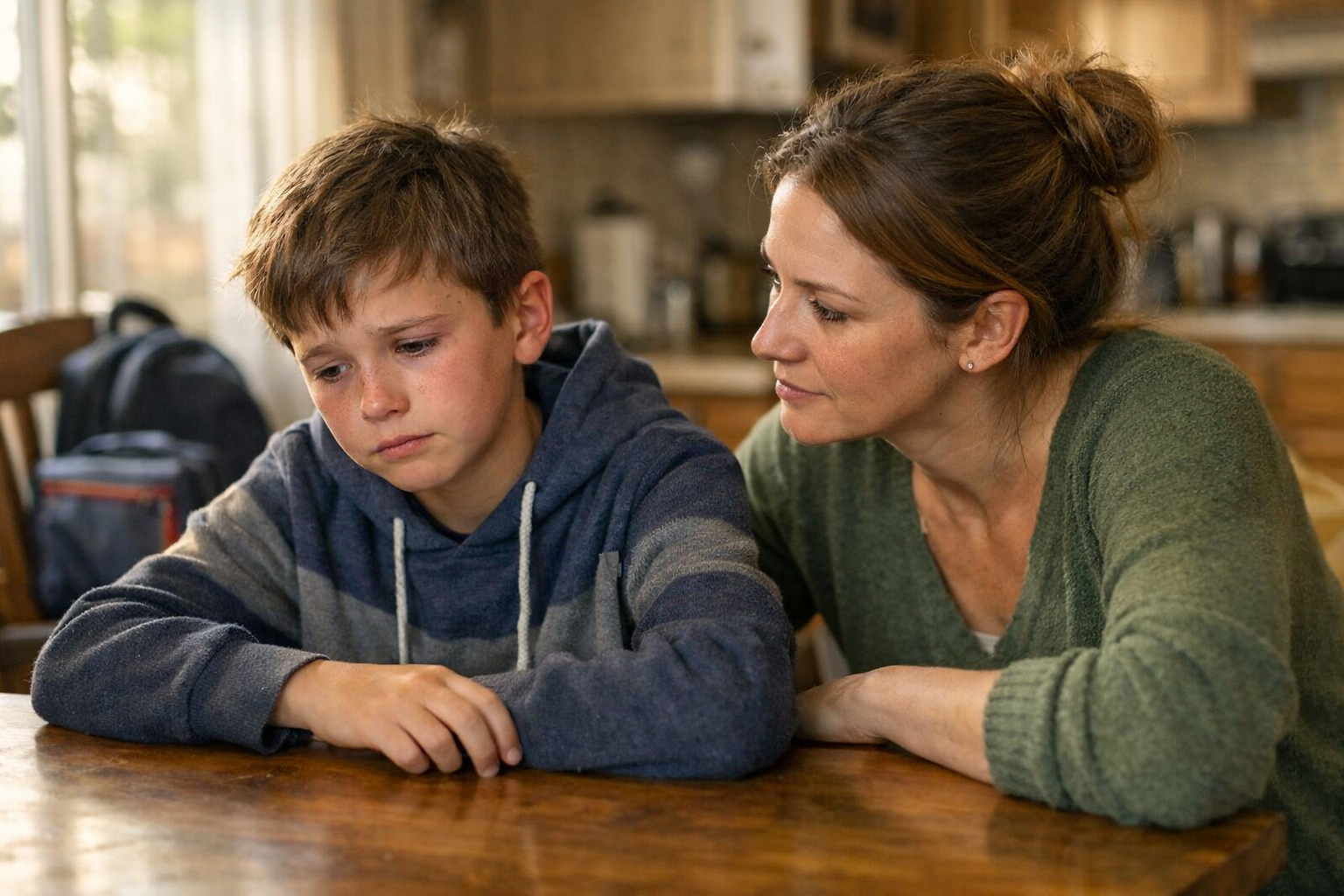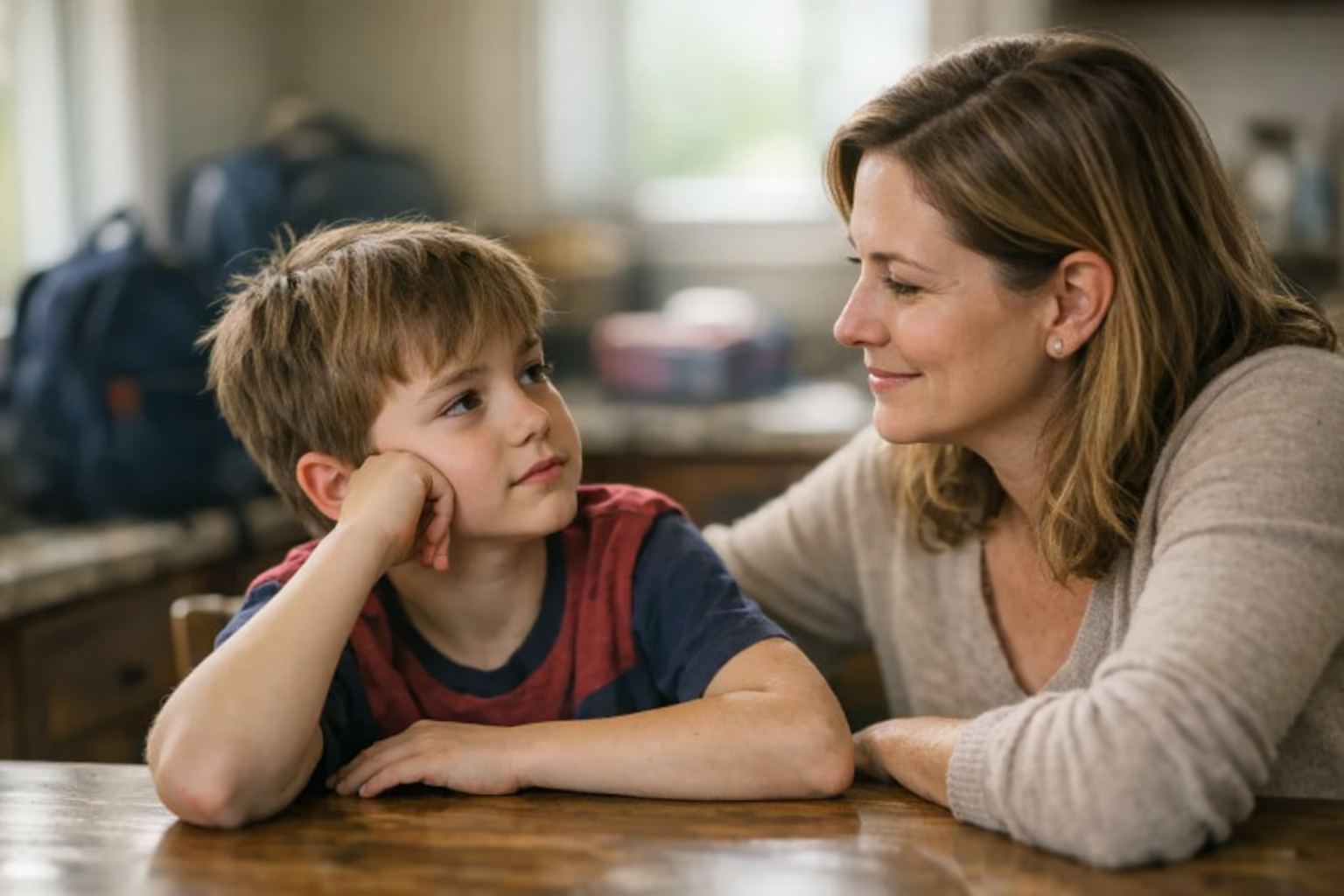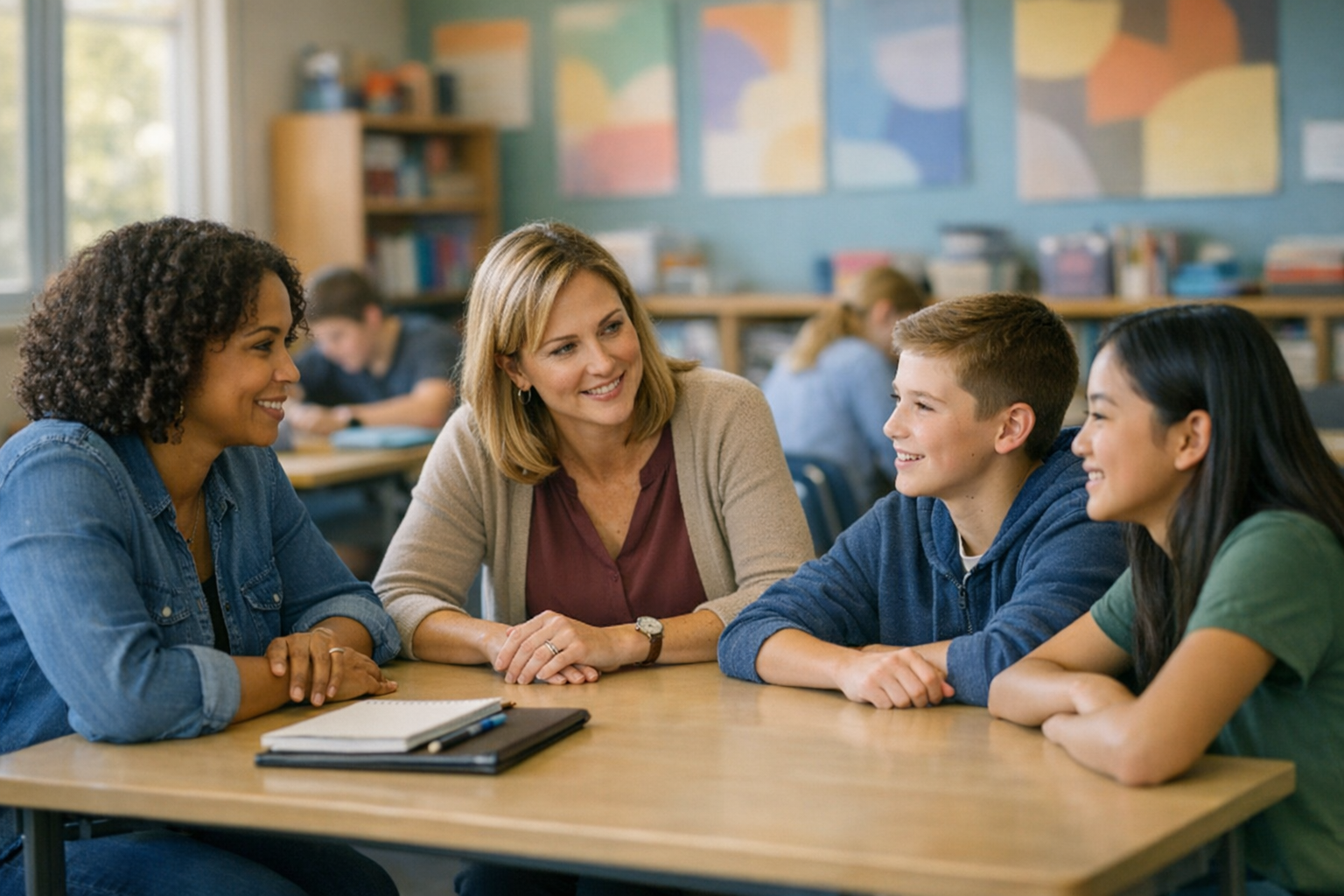
Middle school conflict is common: friendships shift fast, social status feels high-stakes, and students are still learning how to disagree without going straight to shutdown, sarcasm, or yelling.
This guide focuses specifically on school-based conflict resolution activities you can use in classrooms, counseling groups, or at home to prep kids for peer and teacher conflicts.
You’ll find ready-to-run activities, realistic scenarios, and quick checklists for collaborating with teachers and counselors so everyone is working from the same plan.
Advice:
If school conflict is becoming a pattern, it can help to step back and notice what keeps setting it off: peer dynamics, stress, unclear expectations, or a mismatch between adult and student communication styles. The Parenting Test can help you reflect on what your child may be reacting to and what approaches tend to calm (not escalate) tension at home and school. Use your results to choose one or two small changes to try for the next two weeks.
For a broader family approach (including at-home repair conversations and long-term problem-solving), see this guide: How to solve family problems and conflicts. Best conflict resolution techniques.
Why middle school conflicts escalate at school
- Public pressure: Conflicts happen in front of peers, which can make backing down feel embarrassing.
- Fast assumptions: Texts, group chats, and rumors reward quick reactions, not careful clarification.
- Unclear expectations: “You should know better” often replaces explicit teaching of what to do instead.
- Adult-student power differences: A student may experience a correction as “getting singled out,” while the teacher sees it as routine classroom management.
Goals of these activities (school-specific)
- Help students identify triggers (peer status, teasing, feeling disrespected, perceived unfairness).
- Teach language for de-escalation that works with peers and adults.
- Practice a predictable repair process (what to do after harm is done).
- Give teachers and parents shared tools so students hear the same message across settings.
Who this is for and what you’ll need
Participants: Middle school students (grades 6–8), advisory groups, or counseling groups
Group size: 8–20 students
Time: 45–90 minutes (choose 2–3 activities)
Materials: Paper, markers, scenario cards (included below), optional timer, optional “feelings” word list
Before you start: a quick safety and respect agreement
Read this out loud and ask students to agree:
- We can talk about conflict without naming real students or sharing private details.
- We can pass if a scenario feels too personal.
- We practice skills, not perfection.
- If someone is unsafe, adults step in right away.
Activity 1: The “Changing Rules” warm-up (how unclear expectations create conflict)
Purpose: Show how frustration builds when expectations change midstream.
How: Ask two volunteers to complete a simple task (draw a school logo, plan a class party, or create a quick poster). Interrupt with changing rules every 15–20 seconds (new format, new requirements, new standards). End by saying there’s “no winner.”
Debrief questions:
- What feelings showed up first?
- What made it harder: the task, the interruptions, or not knowing the goal?
- Where does this show up at school (assignments, rules, group projects, sports)?
- What could an adult do differently to prevent escalation?
Skill link: Conflicts often shrink when expectations are clear up front (what, when, how, and what “done” looks like).
Activity 2: Two-Truth Viewpoints (practice seeing more than one perspective)
Purpose: Teach students to separate facts from interpretations and recognize that two perspectives can exist at once.
How: Put a neutral school situation on the board (example: “A group didn’t save you a seat at lunch,” or “A teacher asked you to redo work”). In pairs, students write:
- Interpretation A: “This happened because…”
- Interpretation B: “Another possible reason is…”
- One fact I know is…
- One question I could ask is…
Debrief: Which interpretations would lead to escalation? Which questions would reduce it?
Mini-lesson: The school conflict map (simple and memorable)
Use this quick map before role-play. Students can write it on a card.
- Topic: What are we arguing about?
- Need: What do I need right now (respect, space, fairness, belonging, safety)?
- Impact: What happened to me or the class?
- Request: What am I asking for next?
Activity 3: The “Repair Script” practice (peer and teacher versions)
Purpose: Give students words to use after they’ve snapped, teased, or gotten defensive.
Peer repair script: “I was upset and I said/did ____. That wasn’t OK. What I meant was ____. Next time I’ll ____. Are we OK?”
Teacher repair script: “I got frustrated and my tone wasn’t respectful. I want to fix that. Can we restart? Here’s what I need from you, and I’ll be clear about it.”
How: Role-play in pairs. One student practices the script, the other practices responding with one of these options:
- “Thanks for saying that. Next time, please just tell me directly.”
- “I need a minute. I’ll talk after class.”
- “I’m still upset. I’m willing to try again tomorrow.”
Activity 4: Box of Misunderstandings (scenario problem-solving)
Purpose: Practice de-escalation, boundary-setting, and repair with realistic school situations.
How: Small groups choose a scenario. They must create a response that:
- Names the issue without insults
- States a need or boundary
- Offers a next step (question, compromise, adult help, or repair)
Scenario 1: The desk partner insult
A student says, “I’m not sitting with you. You take up the whole desk.”
- What’s the respectful boundary?
- What’s a solution that protects learning time?
Scenario 2: The tapping during class (student-teacher conflict)
A teacher says, “Please stop tapping and focus.” The student replies, “Why is it always me? You always call me out!”
- How can the teacher respond to the emotion without dropping the expectation?
- What could the student say that keeps dignity and solves the problem?
Scenario 3: Two competing groups (classroom climate)
Two friend groups compete for status. Sarcasm and mocking are constant, and sometimes it turns physical.
- What class norms would help?
- When is adult intervention needed immediately?
Scenario 4: A new student becomes popular
A new student is threatened for “showing off.” The student responds, “I don’t care what you think.”
- What could bystanders do in the moment?
- What’s a safe way to ask for adult help?
Scenario 5: The broken phone
You lend a friend your phone. It gets bumped and breaks. Your friend says it’s not their fault.
- What’s a fair next step?
- How do you keep the conversation respectful with parents and the school?
Teacher-parent collaboration: quick checklists
For parents: how to prep before emailing or meeting the school
- Write down facts (what happened, when, who was present) separate from interpretations.
- Ask your child: “What do you want to be different next week?”
- Pick one measurable goal (example: “no hallway comments,” “teacher and student reset signal,” “new seat plan”).
- Plan one repair step your child can do (apology, replacing an item, agreeing to a signal).
For teachers/counselors: a 5-minute de-escalation flow
- Name the goal: “I want us to solve this and get back to learning.”
- Label the feeling (without agreeing with disrespect): “You seem frustrated.”
- State the expectation: “We speak respectfully and keep hands to ourselves.”
- Offer two choices: “Take a 2-minute break or switch seats.”
- Repair later: “We’ll talk after class about what to do next time.”
For students: a pocket script for peer conflict
- Pause: “I need a second.”
- Say what you saw: “When you ____…”
- Say the impact: “…I felt ____ / it made it hard to ____.”
- Ask: “Can we ____ instead?”
- Exit if needed: “I’m not doing this in front of people. I’ll talk later.”
When to seek additional help
If conflicts include threats, repeated bullying, harassment, discrimination, self-harm talk, or physical aggression, involve the school right away and follow your district’s reporting process. If your child’s mood, sleep, or school functioning is worsening, consider talking with your pediatrician or a licensed mental health professional for guidance. The American Academy of Pediatrics offers family guidance on children’s mental health and when to get support.
Related reads for specific school ages and examples
- How to Handle Kid Conflicts at Preschool and School
- Teaching conflict resolution to kids. 10 examples how to resolve a conflict situation at school
- Preschool Conflict Resolution: Simple Games That Teach Problem-Solving
Recommendation:
If you’re unsure whether to step in, ask the school for a simple plan: what adults will do in the moment, what your child can say or do, and how repair will happen afterward. The Parenting Test can help you choose responses that fit your child’s temperament and your family routines, so your messages stay consistent between home and school. Bring one or two specific takeaways to your next teacher or counselor conversation.
Closing thoughts
School conflict is tough, but it’s also teachable. When students practice clear expectations, calm boundaries, and repair language, they’re more likely to protect friendships, reduce classroom disruption, and rebuild trust with adults after a hard moment.